

What are the Symptoms of Parasomnia and How is it Managed in Bloomington, IL?
Parasomnia involves abnormal behaviors during sleep, such as sleepwalking, night terrors, sleep talking, and REM sleep behavior disorder. Common symptoms include acting out dreams, walking or moving during sleep, and feeling confused or disoriented upon waking. These behaviors can disrupt sleep and lead to safety concerns. Managing parasomnia typically involves identifying triggers such as stress, sleep deprivation, or underlying sleep disorders. At Koala Center for Sleep Disorders in Bloomington, IL, our team provides comprehensive evaluations and personalized treatment plans. For more information, please contact us today or request an appointment online. We are conveniently located at 2309 E. Empire St. Ste 500 Bloomington, IL 61704.
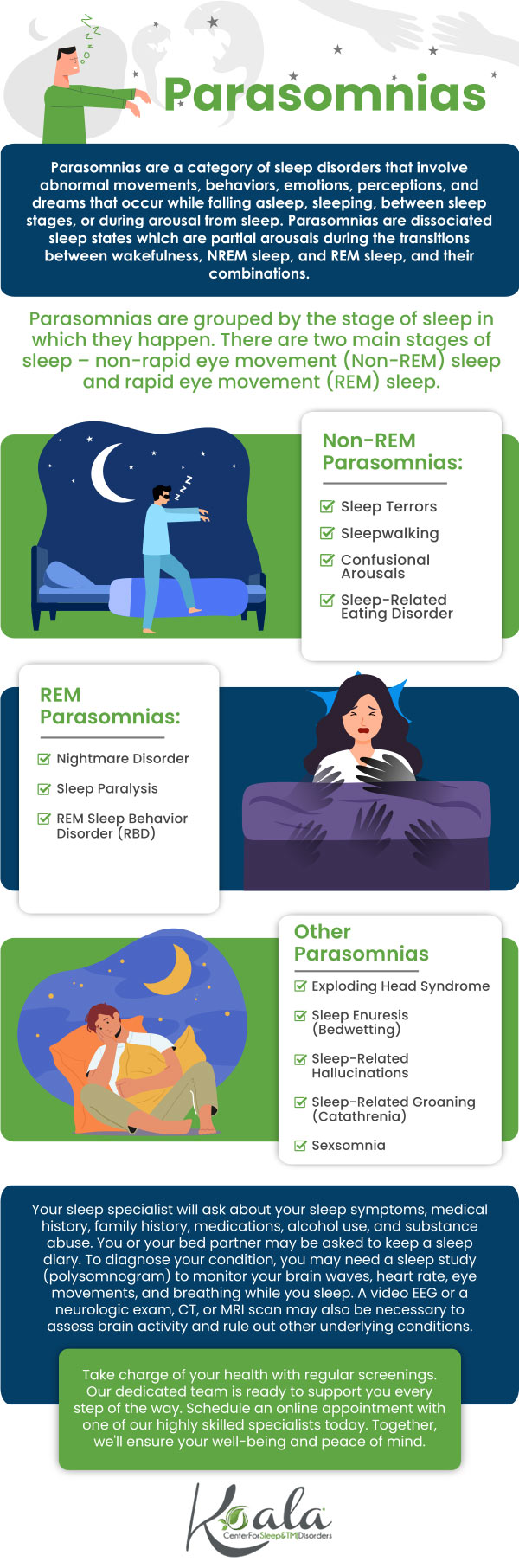
Table of Contents:
What are the most common symptoms of parasomnia?
How do I know if I have a parasomnia disorder or just poor sleep habits?
Can parasomnia lead to injuries or accidents at night?
What lifestyle changes help reduce parasomnia symptoms?
How do sleep specialists at Koala Center for Sleep Disorders in Bloomington, IL, create a personalized treatment plan?
Parasomnia refers to abnormal behaviors or movements during sleep that can disrupt sleep and lead to discomfort. The most common symptoms of parasomnia include:
● Sleepwalking: Walking or performing other complex behaviors while still asleep, often without awareness.
● Night terrors: Sudden waking with feelings of extreme fear, typically accompanied by screaming or thrashing.
● Sleep talking: Speaking or mumbling during sleep without being aware.
● REM sleep behavior disorder: Acting out vivid dreams, such as kicking or punching during the night.
● Teeth grinding (bruxism): Grinding or clenching teeth during sleep, which can cause jaw pain or headaches.
If you or a loved one is experiencing these symptoms, it’s important to consult a sleep specialist. At Koala Center for Sleep Disorders, we can help diagnose and treat parasomnia through personalized care and advanced sleep studies.
It can be challenging to distinguish between parasomnia disorder and poor sleep habits. However, key differences exist. If you experience consistent and disruptive behaviors like sleepwalking, night terrors, or acting out dreams, it’s more likely to be a parasomnia disorder. Poor sleep habits, on the other hand, are typically linked to irregular sleep patterns, inadequate rest, or insufficient sleep hygiene, and may not cause physical behaviors during sleep.
Here’s how to identify the difference:
● Parasomnia symptoms include involuntary movements or behaviors, such as sleepwalking or talking.
● Poor sleep habits usually lead to difficulty falling or staying asleep, but no unusual behaviors occur during sleep.
At Koala Center for Sleep Disorders, we help diagnose the root cause by evaluating your sleep patterns, symptoms, and any underlying conditions. Our specialists use sleep studies and consultations to create a tailored treatment plan for you.
Yes, parasomnia can lead to injuries or accidents at night, particularly if the episodes involve sleepwalking or other physical behaviors. The risk of harm increases when individuals engage in activities while still asleep, unaware of their surroundings. Some common risks include:
● Falling: Sleepwalking or walking during night terrors increases the risk of tripping or falling.
● Collisions: Sleep-related movements, such as thrashing or hitting objects, can lead to bruises, cuts, or other injuries.
● Teeth damage: Teeth grinding during sleep can lead to worn-down teeth, jaw pain, or even broken teeth.
● Accidental harm: Sleepwalking can cause individuals to walk into dangerous areas, like the kitchen, stairs, or doors.
At Koala Center for Sleep Disorders, we focus on diagnosing parasomnia early and recommend treatment to minimize the risks and ensure better, safer sleep. We use a variety of approaches, including sleep studies and behavioral therapy.
Making certain lifestyle changes can help reduce parasomnia symptoms by promoting better sleep hygiene and reducing the triggers that lead to episodes. Key changes include:
● Maintaining a consistent sleep schedule: Going to bed and waking up at the same time each day can help regulate your sleep cycle.
● Reducing stress: Managing stress through relaxation techniques, meditation, or deep breathing can help reduce parasomnia triggers.
● Creating a sleep-friendly environment: Keeping your bedroom cool, dark, and quiet can enhance sleep quality and minimize disturbances.
● Avoiding alcohol or heavy meals before bed: Alcohol and certain foods can disrupt sleep patterns and increase parasomnia episodes.
● Regular physical activity: Exercise during the day helps improve sleep quality and can reduce the frequency of parasomnia symptoms.
At Koala Center for Sleep Disorders, we offer personalized care to help you implement these lifestyle changes and reduce parasomnia symptoms effectively.
At Koala Center for Sleep Disorders in Bloomington, IL, our sleep specialists create personalized treatment plans based on a thorough evaluation of your symptoms, sleep patterns, and underlying conditions. The process includes:
● Comprehensive sleep assessment: We begin with a detailed consultation, including a discussion of your medical history, sleep habits, and specific symptoms, such as sleepwalking or night terrors.
● Sleep studies: If necessary, we may recommend an in-lab or at-home sleep study to monitor your sleep patterns and behaviors. This helps us identify parasomnia episodes and any associated sleep disorders.
● Customized treatment options: Based on your diagnosis, we create a treatment plan that may include cognitive behavioral therapy for sleep disorders, oral appliances, or medications. We also recommend lifestyle changes that support better sleep hygiene.
By focusing on your unique needs, our team at Koala Center for Sleep Disorders ensures that your treatment plan is tailored to improve sleep quality and reduce parasomnia symptoms effectively. For more information, please contact us today or request an appointment online. We are conveniently located at 2309 E. Empire St. Ste 500 Bloomington, IL 61704.
Check Out Our 5 Star Reviews


Additional Services You May Need
▸ KoalaKIDZzz®
▸ Sleep Apnea
▸ Snoring
▸ TMJ Disorder
▸ Fatigue
▸ Sleep Disorders
▸ Weight Loss
▸ CPAP Alternative
▸ Oral Appliances


 Send Text
 How May I Help You?