

Coping With Hypnagogic Hallucinations: Tips for a Peaceful Sleep
Hypnagogic hallucinations are vivid, dream-like sensations or images that occur at the borderline between wakefulness and sleep. While they are often harmless, frequent or intense experiences can be unsettling and interfere with a restful night. At Koala Center For Sleep & TMJ Disorders, patients benefit from expert evaluation by our team, who specialize in identifying the underlying sleep issues that contribute to disrupted sleep cycles and unusual nighttime phenomena. For more information, please contact us today or request an appointment online. We are conveniently located at 11825 N. State Rt 40, Ste 100, Dunlap, IL 61525.
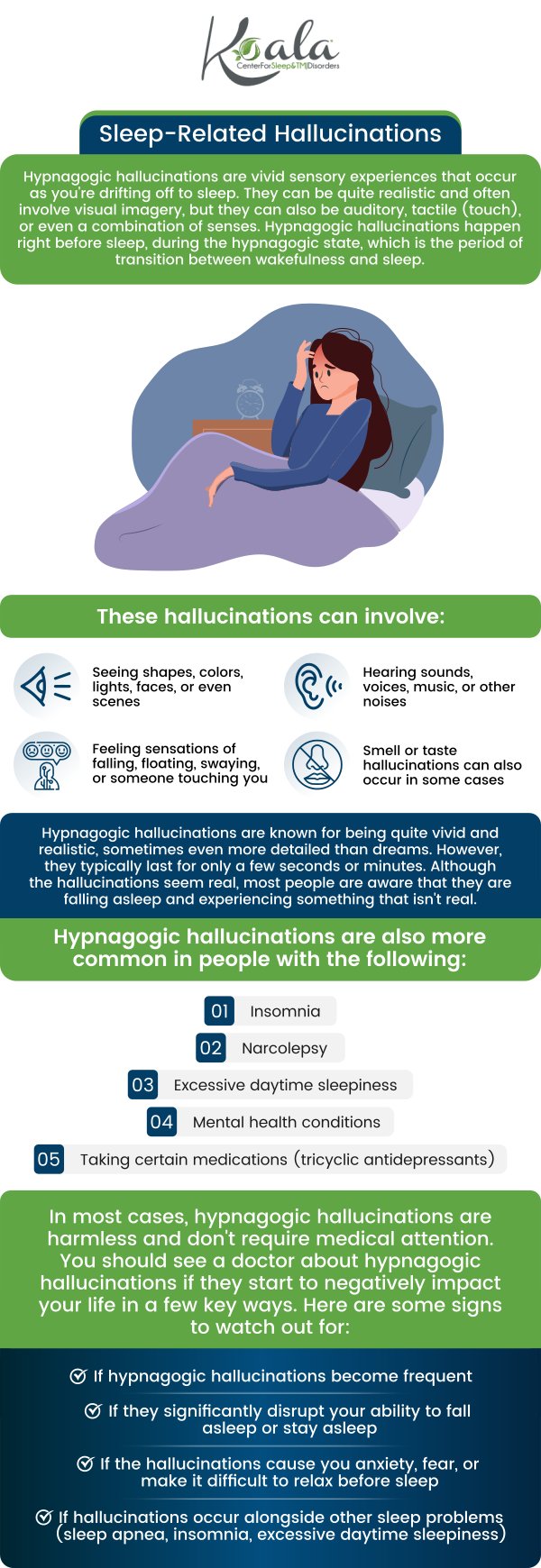
Table of Contents:
What causes the vivid, dream-like sensations or visions that occur just as I am falling asleep?
Are hypnagogic hallucinations a symptom of narcolepsy or a common sign of extreme sleep deprivation?
How can stress and anxiety levels influence the frequency of these “waking dreams”?
Is there a link between sleep apnea-induced oxygen drops and hallucinations?
Can the experts at Koala Center For Sleep & TMJ Disorders determine if my hallucinations are a side effect of a fragmented sleep cycle?
Tips for Coping With Hypnagogic Hallucinations
Hypnagogic hallucinations occur during the transition from wakefulness to sleep, a period known as sleep onset. During this stage, the brain begins shifting from conscious thought to REM (rapid eye movement) sleep, which is normally associated with vivid dreams.
Causes may include:
● Disrupted sleep patterns: Irregular sleep schedules can increase the likelihood of vivid sleep onset experiences.
● Sleep deprivation: Prolonged lack of restorative sleep primes the brain to enter dream states prematurely.
● Neurological factors: Temporary misfiring of neurons during the sleep transition can trigger visual, auditory, or tactile hallucinations.
Additionally, underlying mental health conditions such as anxiety or depression can exacerbate the frequency of hypnagogic hallucinations. High levels of stress and heightened emotional states can disrupt the normal sleep cycle, making it harder for the brain to transition smoothly from wakefulness to sleep. This can lead to an increased likelihood of experiencing these vivid, often unsettling episodes during the sleep onset phase. Addressing emotional well-being can significantly improve sleep quality and reduce the occurrence of these hallucinations.
Both scenarios are possible.
● Narcolepsy: In some individuals, hypnagogic hallucinations are a classic symptom, often accompanied by cataplexy (sudden muscle weakness), excessive daytime sleepiness, and sleep paralysis.
● Extreme sleep deprivation: Even without narcolepsy, severe lack of sleep can trigger hallucinations at sleep onset, as the brain attempts to catch up on REM cycles.
The Koala Center For Sleep & TMJ Disorders evaluates the frequency, intensity, and context of hallucinations to determine whether they are related to a sleep disorder or simply a consequence of insufficient rest. Accurate diagnosis is essential for choosing the correct intervention and restoring normal sleep patterns.
Stress and anxiety can significantly increase the occurrence of hypnagogic hallucinations. High cortisol levels and hyperarousal prevent the brain from fully relaxing, which can cause:
● Intrusive visual or auditory sensations while falling asleep
● Nighttime awakenings due to startling hallucinations
● Difficulty transitioning smoothly into deep sleep
Chronic stress amplifies hallucinations and contributes to fragmented sleep, reducing overall sleep quality. Our specialist recommends stress-management strategies such as mindfulness, guided relaxation, and consistent sleep routines to minimize these episodes.
In addition to managing stress, creating a calming bedtime routine can help further reduce the occurrence of hypnagogic hallucinations. Engaging in activities like reading, taking a warm bath, or practicing relaxation exercises before bed can signal your brain that it’s time to unwind. Maintaining a peaceful sleep environment, free from distractions and stressors, also promotes a more restful night. By incorporating these habits, you can enhance your ability to transition into sleep more smoothly and reduce the impact of anxiety-related sleep disturbances.
Yes. Sleep apnea, especially obstructive sleep apnea (OSA), can disrupt normal sleep architecture and oxygen supply to the brain. These intermittent drops in oxygen can lead to:
● Micro-arousals that interrupt sleep cycles: These brief awakenings disrupt the deep, restorative stages of sleep, leaving you feeling unrefreshed in the morning.
● Incomplete REM cycles, where hypnagogic-like imagery may spill over into wakefulness: This can lead to vivid dreams or hallucinations that occur when transitioning between sleep and wakefulness.
● Heightened brain sensitivity at sleep onset: As the brain becomes more sensitive when drifting off, it can amplify sensory perceptions, increasing the likelihood of experiencing disturbing imagery or sounds.
Patients with sleep apnea may report more vivid or frequent hypnagogic hallucinations, particularly when untreated or using a CPAP device inconsistently. The Koala Center For Sleep & TMJ Disorders assesses sleep-disordered breathing and oxygen fluctuations to determine whether apnea contributes to hallucinations, ensuring proper intervention.
At Koala Center For Sleep & TMJ Disorders, our expert team specializes in evaluating sleep fragmentation and underlying airway issues, which are often overlooked in standard sleep assessments. We conduct comprehensive sleep studies and evaluate oral appliances.
● Identify micro-arousals or subtle disruptions in sleep architecture
● Assess oxygen levels and airway obstruction during sleep
● Determine whether hallucinations are tied to REM intrusion, sleep deprivation, or airway-related disturbances
● Provide targeted treatment, including oral appliances, sleep hygiene strategies, or stress management techniques
By addressing the root cause rather than just the symptoms, patients can reduce or eliminate hypnagogic hallucinations and achieve restorative, uninterrupted sleep.
While professional evaluation is essential, these practical strategies can help manage and reduce hallucinations:
1. Maintain a consistent sleep schedule: Going to bed and waking up at the same time daily stabilizes your sleep cycle. This consistency helps your body produce the right amount of melatonin, making it easier to fall asleep and wake up refreshed.
2. Reduce stress before bed: Relaxation techniques such as meditation, deep breathing, or gentle stretching calm the mind. By calming your nervous system, you create the optimal conditions for your body to unwind and prepare for restful sleep.
3. Limit stimulants: Avoid caffeine, nicotine, and heavy meals close to bedtime. These substances can interfere with your ability to fall asleep, so aim to stop consuming them at least 3-4 hours before bedtime for better sleep quality.
4. Create a sleep-friendly environment: A dark, quiet, and cool bedroom promotes uninterrupted sleep. Investing in blackout curtains or a white noise machine can further enhance the quality of your rest by reducing disturbances.
5. Address underlying sleep disorders: Treating sleep apnea, UARS, or other breathing disruptions can significantly reduce hallucinations. Seeking professional treatment, such as a CPAP machine or oral appliance, can restore your breathing pattern and improve your sleep quality.
Hypnagogic hallucinations can be startling but are often a signal that your sleep cycle is fragmented or disrupted. Koala Center For Sleep & TMJ Disorders provides thorough assessments to uncover hidden sleep issues, including airway obstruction and REM disturbances. If you frequently experience vivid, dream-like sensations at sleep onset, professional evaluation can help identify the cause and guide interventions to restore peaceful, restorative sleep. By addressing both lifestyle factors and underlying disorders, patients can reduce hallucinations, improve sleep quality, and wake feeling truly refreshed. For more information, please contact us today or request an appointment online. We are conveniently located at 11825 N. State Rt 40, Ste 100, Dunlap, IL 61525.
Check Out Our 5 Star Reviews


Additional Services You May Need
▸ KoalaKIDZzz®
▸ Sleep Apnea
▸ Snoring
▸ TMJ Disorder
▸ Fatigue
▸ Sleep Disorders
▸ Weight Loss
▸ CPAP Alternative
▸ Oral Appliances


 Send Text
 How May I Help You?