

Headaches and Jaw Pain: Is Your TMJ to Blame?
At the Koala® Center For Sleep & TMJ Disorders, we understand that chronic headaches and facial pain are often misdiagnosed. Our specialists are experts in identifying if Temporomandibular Joint (TMJ) Disorder is the true source of your suffering, providing specialized, non-surgical therapies to finally bring you relief. For more information, please contact us today or request an appointment online. We have convenient locations in Bloomington IL, Peoria/Dunlap IL, El Paso TX, and Wausau WI.
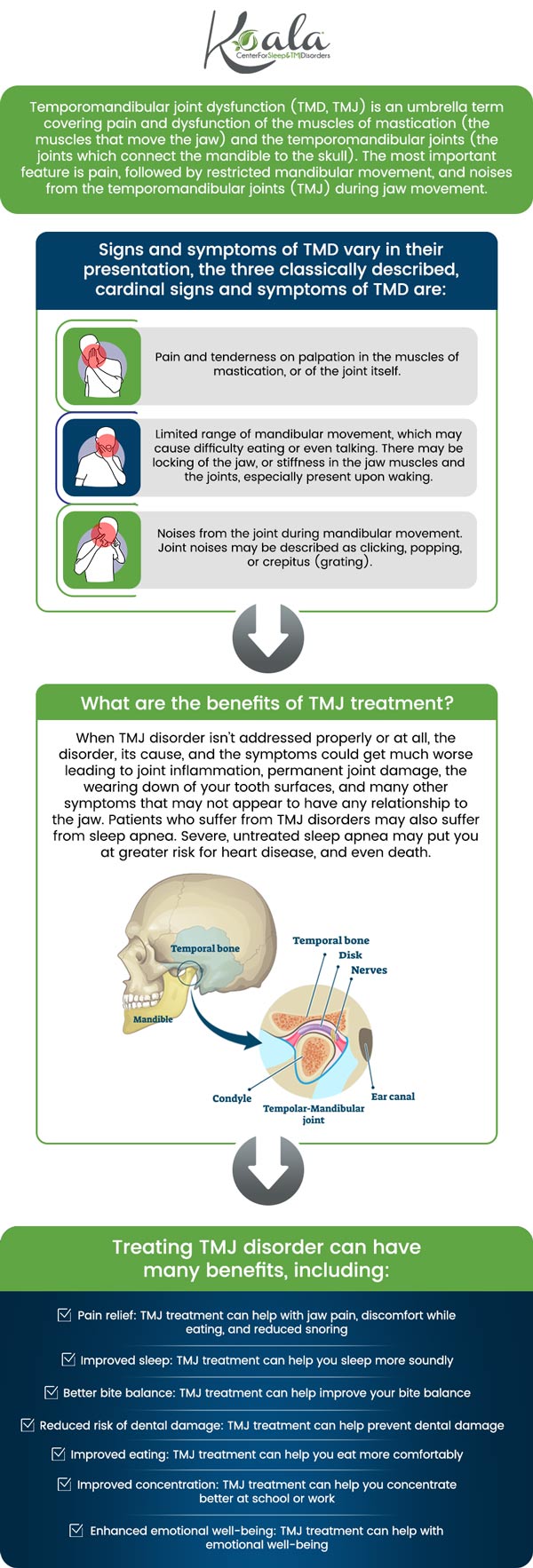
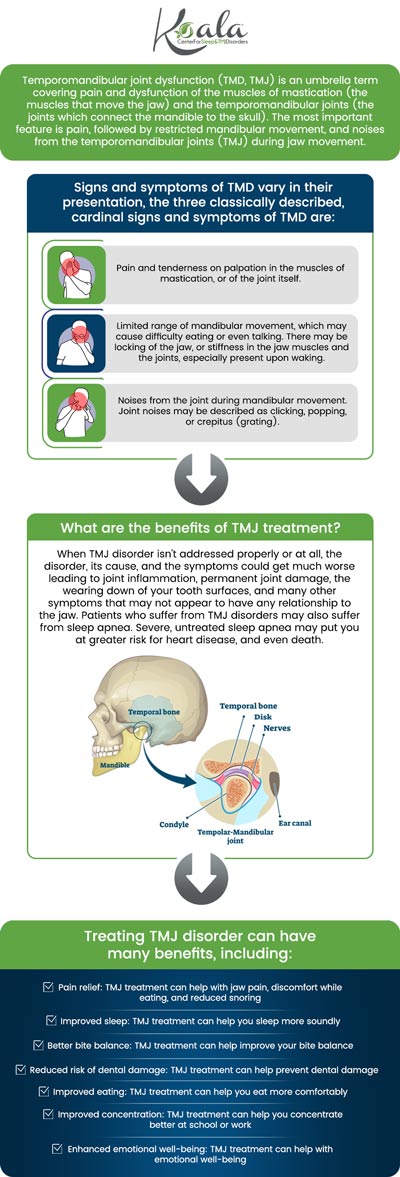
Table of Contents:
What are the treatment options for TMJ-related headaches and jaw pain?
Can TMJ problems cause frequent headaches?
How can tension in the jaw muscles lead to pain in the temples or forehead?
Why do TMJ headaches often feel like migraines or tension headaches?
Come to Koala® Center For Sleep & TMJ Disorders for a diagnosis
Temporomandibular joint (TMJ) disorders can cause persistent headaches and jaw pain, disrupting daily life and comfort. At Koala® Center For Sleep & TMJ Disorders, we specialize in diagnosing and treating TMJ-related headaches and jaw pain using a comprehensive, patient-centered approach.
Our treatment plans typically begin with conservative, non-surgical therapies. These may include self-care strategies such as eating soft foods, applying ice or moist heat to the jaw, and teaching gentle jaw stretching and relaxation exercises to reduce tension. We may also recommend over-the-counter pain relievers or anti-inflammatory medications to help manage discomfort and inflammation.
As dental professionals with advanced training in TMJ disorders, we often recommend custom-designed oral appliances, such as splints or mouthguards, particularly if teeth grinding or clenching is a contributing factor. These appliances are designed to relieve pressure on the TMJ and protect your teeth.
Physical therapy is another effective option we may offer, focusing on exercises that strengthen your jaw muscles and improve joint mobility. Because stress can play a significant role in TMJ disorders, we may also integrate stress management techniques or recommend counseling to help reduce tension and improve overall wellness.
If conservative measures are not providing adequate relief, our experienced team may consider further options, such as prescription medications or targeted therapies. In rare and severe cases, we can discuss referral for surgical treatment, but our primary goal is always to provide effective, minimally invasive solutions tailored to your unique needs.
Absolutely—TMJ (temporomandibular joint) problems are a common but often overlooked cause of frequent headaches. The temporomandibular joint connects your jawbone to your skull, enabling movements such as chewing, speaking, and yawning. When this joint or the muscles surrounding it become irritated or dysfunctional—a condition known as temporomandibular disorder (TMD)—it can lead to a wide range of symptoms, including persistent headaches.
At Koala® Center For Sleep & TMJ Disorders, our team specializes in diagnosing and treating TMJ disorders and their related symptoms. Many patients with TMD describe their headaches as tension-type headaches—a constant, dull ache around the temples, forehead, or even behind the eyes. These headaches often worsen with jaw movements, such as chewing or opening the mouth wide, and may be accompanied by jaw pain, clicking or popping sounds in the jaw, earaches, or facial pain.
The reason TMJ disorders can trigger headaches is that the joint and surrounding muscles are located close to the nerves and muscles of the head and neck. When these muscles become tense or inflamed, they can refer pain to the head, contributing to tension headaches or even migraines.
At Koala® Center For Sleep & TMJ Disorders, we frequently see patients whose jaw muscle tension is contributing to pain in the temples or forehead. The jaw muscles responsible for chewing—such as the masseter and temporalis—can become tight or overused due to conditions like teeth grinding (bruxism), jaw clenching, or chronic stress. These habits often lead to the development of trigger points, which are sensitive areas within the muscle that can refer to pain in other parts of the head.
The temporalis muscle, for instance, plays a key role in closing the jaw and extends from the side of the skull near the temples to the jawbone. When this muscle is tense, it can directly cause temple pain. Additionally, because the nerves that supply the jaw muscles overlap with those serving the temples and forehead—specifically branches of the trigeminal nerve—jaw tension can radiate and cause discomfort in these regions. This is known as referred pain and is a common phenomenon in patients with TMJ (temporomandibular joint) disorders.
Chronic tension in the jaw muscles can also result in muscle fatigue and inflammation, which may exacerbate pain and contribute to tension headaches—often experienced as a dull ache in the temples or forehead. If you are experiencing these symptoms, it may be a sign of an underlying TMJ disorder or sleep-related issue.
We understand that headaches can be complex and frustrating—especially when their true cause is misidentified. Many people don’t realize that dysfunction or inflammation of the temporomandibular joint (TMJ)—the hinge connecting your jaw to your skull—can result in headaches that are often mistaken for migraines or tension headaches.
This happens because the TMJ is located near major nerves, like the trigeminal nerve, which is also involved in migraine pain. When the TMJ is inflamed, misaligned, or under strain, it can irritate these nerves, causing pain that radiates to the temples, forehead, or even behind the eyes. These are the same areas affected during migraines, making TMJ-related headaches difficult to distinguish without specialized evaluation.
Additionally, TMJ disorders can lead to muscle tension in the jaw, neck, and scalp. This tension frequently mimics the tight, band-like discomfort of tension-type headaches. Patients may also experience facial pain, jaw stiffness, and sensitivity to light or sound—symptoms that overlap with other headache disorders.
Our team specializes in identifying and treating TMJ-related headaches. Using advanced diagnostic tools and a holistic approach, we distinguish TMJ headaches from other types and address their root cause—rather than just masking the symptoms. This is important because the most effective treatments for TMJ disorders differ significantly from those for migraines or general tension headaches.
If you are experiencing symptoms such as frequent snoring, persistent fatigue, difficulty concentrating, or jaw pain, it may be time to seek specialized care. At Koala® Center For Sleep & TMJ Disorders, our dedicated team of experts focuses exclusively on the diagnosis and treatment of sleep disorders and TMJ issues. We provide comprehensive evaluations to uncover the root cause of your symptoms, whether it’s sleep apnea, insomnia, bruxism, or temporomandibular joint dysfunction (TMJ/TMD).
As a leader in the field, Koala® Center For Sleep & TMJ Disorders offers advanced diagnostic tools and a personalized, non-surgical approach to care. Our goal is to help you achieve restful sleep, relieve jaw discomfort, and restore your overall well-being. For more information, please contact us today or request an appointment online. We have convenient locations in Bloomington IL, Peoria/Dunlap IL, El Paso TX, and Wausau WI.

Additional Services You May Need
▸ KoalaKIDZzz®
▸ Sleep Apnea
▸ Snoring
▸ TMJ Disorder
▸ Fatigue
▸ Sleep Disorders
▸ Weight Loss
▸ CPAP Alternative
▸ Oral Appliances


 Send Text
 How May I Help You?