

Is Jaw Clicking and Locking Normal or a Sign You Should See a TMJ Specialist?
Jaw clicking or locking can be unsettling, especially when it happens while eating, speaking, or yawning. Many people ignore these symptoms for months or even years, assuming they are harmless. However, persistent jaw noises or episodes where the jaw feels stuck can signal an underlying joint issue that deserves professional evaluation. For more information, please contact us today or request an appointment online. We have convenient locations in Bloomington IL, Peoria/Dunlap IL, El Paso TX, and Wausau WI.
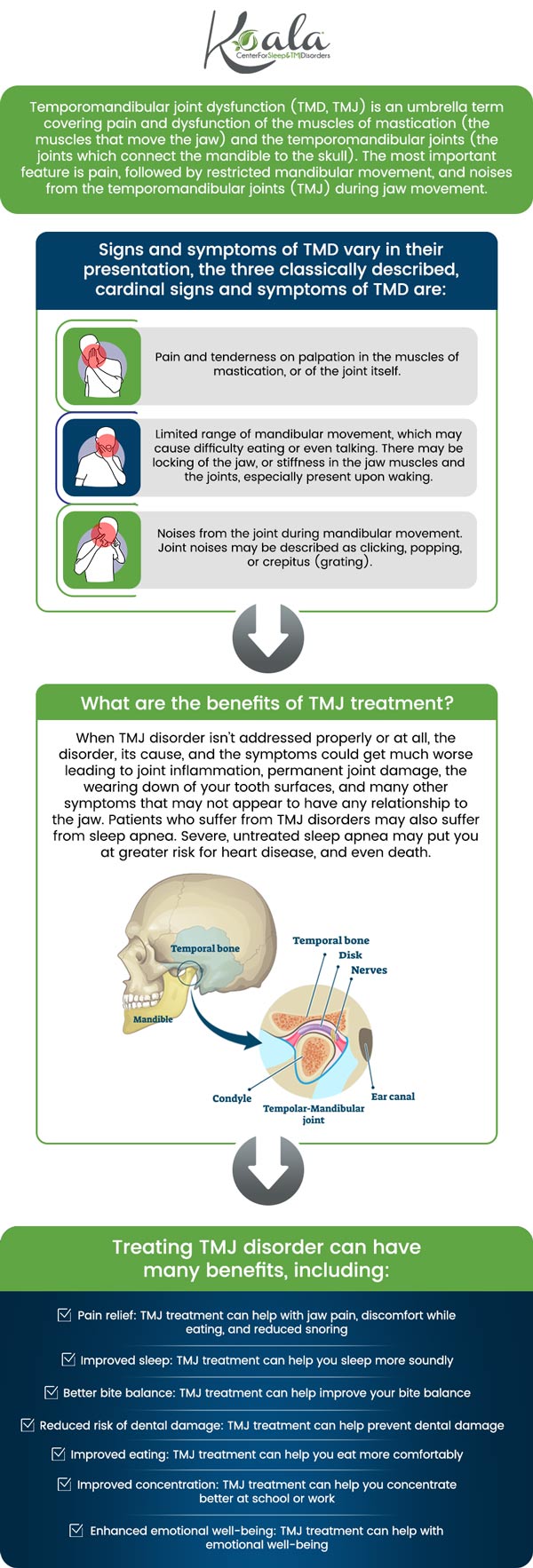
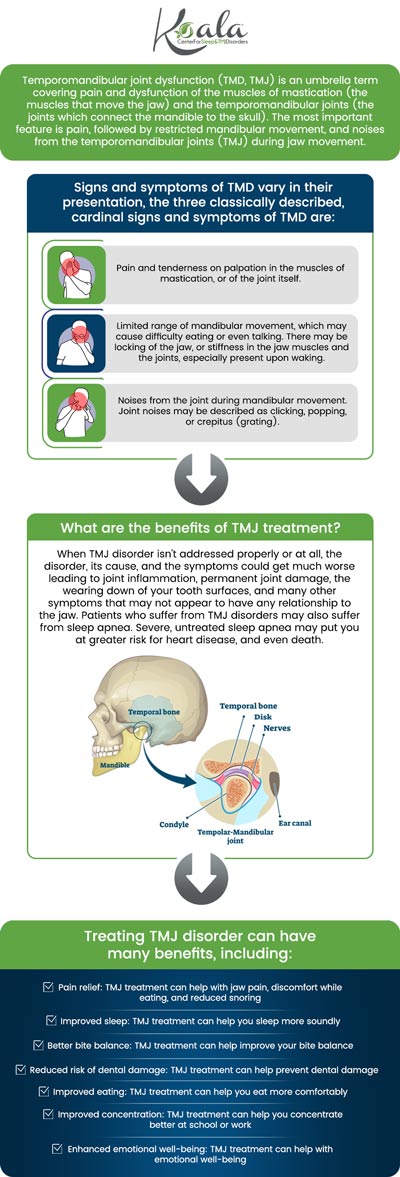
Table of Contents:
What causes jaw clicking and locking?
What is temporomandibular joint (TMJ) dysfunction?
Are jaw sounds always a sign of a problem?
Is jaw locking a medical emergency?
How can Koala Center for Sleep & TMJ Disorders evaluate my jaw clicking and locking?
Personalized TMJ Care at Koala® Center for Sleep & TMJ Disorders
Quick FAQs
Jaw clicking and locking usually occur when the components of the temporomandibular joint stop moving smoothly together. The TMJ is a complex joint made up of bone, cartilage, muscles, ligaments, and a small disc that cushions movement. When this disc shifts out of place or the surrounding muscles become overworked, the joint can produce audible sounds or restrict motion.
Common contributors include jaw misalignment, teeth grinding or clenching, arthritis, facial trauma, or prolonged stress. In many patients evaluated at Koala Center for Sleep & TMJ Disorders, nighttime clenching plays a significant role. The jaw may appear to function normally during the day, yet excessive pressure during sleep gradually destabilizes the joint.
TMJ dysfunction refers to a group of conditions affecting how the jaw joint and surrounding muscles function. It is not a single disease, but rather a spectrum of mechanical and muscular problems that can produce pain, stiffness, clicking, popping, or locking.
Patients with TMJ dysfunction may experience symptoms beyond the jaw, including headaches, ear pressure, facial pain, neck tension, and difficulty chewing. At Koala® Center for Sleep & TMJ Disorders, TMJ dysfunction is often evaluated alongside sleep and airway issues, as poor jaw positioning during sleep can worsen both conditions.
Not every jaw sound is a medical concern. Occasional clicking without pain or restriction can occur temporarily due to muscle fatigue or minor disc movement. However, jaw sounds should not be dismissed when they become frequent, louder, painful, or are accompanied by stiffness or locking.
If clicking progresses to the jaw catching or getting stuck open or closed, it may indicate disc displacement or joint inflammation. Our team of specialists emphasizes that early evaluation at Koala Center for Sleep & TMJ Disorders can often prevent simple joint noise from progressing into chronic pain or limited jaw mobility.
Jaw locking is not usually a life-threatening emergency, but it is a clear sign that the joint is not functioning properly. When the jaw locks repeatedly or requires manipulation to open or close, it suggests structural interference within the joint.
Patients should seek prompt evaluation if jaw locking is painful, recurrent, or interfering with eating or speaking. At Koala Center for Sleep & TMJ Disorders, jaw locking is treated as an important clinical symptom, not something to “wait out.” Early care can reduce inflammation, restore movement, and help avoid more invasive interventions later.
At Koala Center for Sleep & TMJ Disorders, evaluation goes beyond a basic dental exam. Our team conducts a detailed assessment that focuses on how your jaw moves, rests, and functions during both waking hours and sleep.
Your evaluation may include a clinical examination of jaw range of motion, muscle tenderness, bite alignment, and joint sounds. Advanced diagnostic tools may be used to assess disc position, joint stability, and airway relationships. Because many TMJ issues worsen at night, sleep habits and signs of clenching or grinding are also carefully reviewed.
Based on these findings, a personalized treatment plan is developed. This may include custom oral appliances, jaw stabilization therapy, or coordinated care addressing both TMJ and sleep-related contributors.
What sets Koala Center for Sleep & TMJ Disorders apart is our integrated approach to jaw health. We recognize that jaw clicking and locking rarely occur in isolation. They are often connected to sleep disorders, stress patterns, and airway positioning.
Our team of professionals works closely with each patient to identify the root cause of TMJ symptoms rather than offering temporary fixes. Many patients report improvement not only in jaw function, but also in headaches, sleep quality, and daily comfort after beginning care at Koala Center for Sleep & TMJ Disorders.
– Can jaw clicking go away on its own?
Occasional clicking may resolve, but persistent or worsening sounds should be evaluated.
– Does TMJ dysfunction always cause pain?
No, some patients experience clicking or locking without pain in early stages.
– Can TMJ treatment prevent future jaw damage?
Yes, early intervention can stabilize the joint and reduce long-term complications.

Additional Services You May Need
▸ KoalaKIDZzz®
▸ Sleep Apnea
▸ Snoring
▸ TMJ Disorder
▸ Fatigue
▸ Sleep Disorders
▸ Weight Loss
▸ CPAP Alternative
▸ Oral Appliances


 Send Text
 How May I Help You?