

Are Sinus Headaches a Symptom of TMJ?
Many people experience headaches and assume they stem from sinus issues — especially when the pain is located around the forehead, cheeks, or behind the eyes. However, discomfort in these areas can sometimes be caused by temporomandibular joint (TMJ) dysfunction, rather than sinus disease. At the Koala Center for Sleep & TMJ Disorders, our team specializes in evaluating these overlapping symptoms to determine their true source and guide patients toward the most effective treatment. For more information, please contact us today or request an appointment online. We have convenient locations in Bloomington IL, Peoria/Dunlap IL, El Paso TX, and Wausau WI.
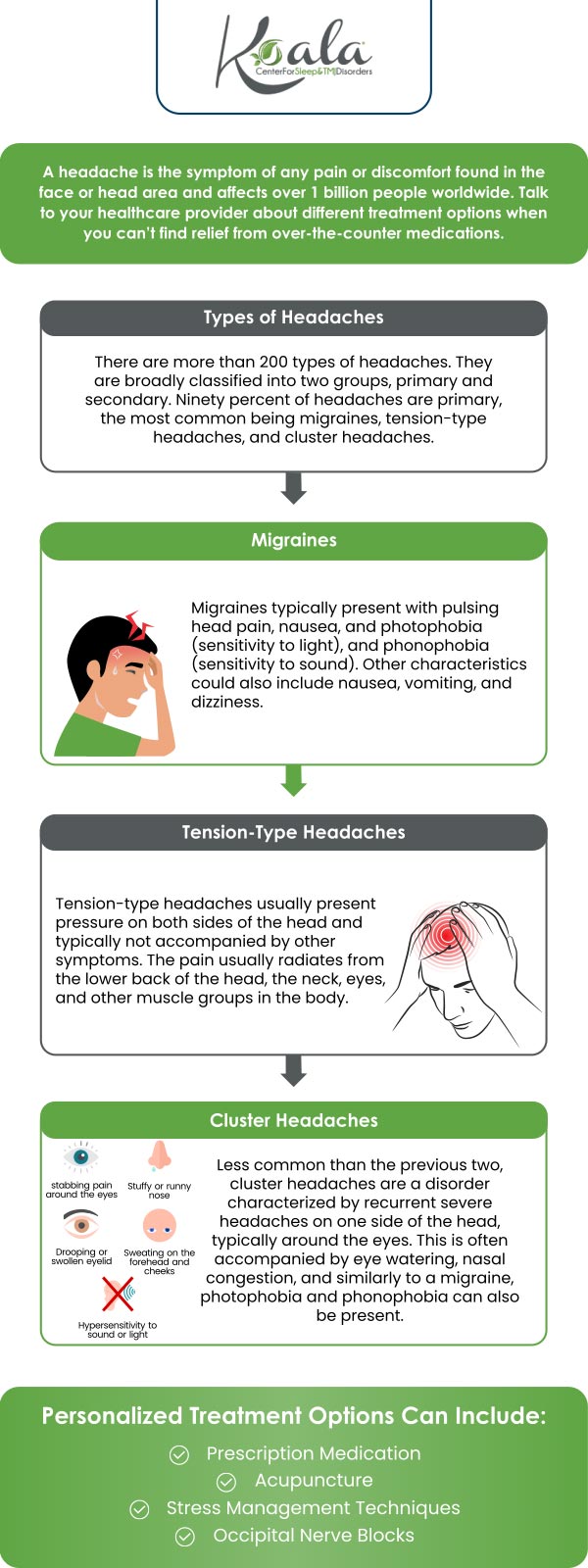
Table of Contents:
What is the difference between a sinus headache and a TMJ headache?
How can I tell if my sinus pain is actually TMJ‑related?
What other TMJ symptoms often accompany sinus headaches?
Can TMJ trigger pressure around the forehead or cheeks?
Can Koala Center for Sleep & TMJ Disorders diagnose whether my sinus pressure is from sinus disease or TMJ?
Although sinus headaches and TMJ headaches can feel very similar, they stem from different underlying causes and have distinguishing features:
Sinus Headache:
A sinus headache is typically caused by inflammation or congestion in the sinus cavities — often due to allergies, infection, or sinusitis. Pain is generally described as a deep, constant pressure in the forehead, cheeks, or bridge of the nose. It is often accompanied by other sinus symptoms such as:
• Nasal congestion or drainage
• Fever or chills
• Reduced sense of smell
• Thick mucus or post‑nasal drip
Sinus headaches tend to worsen when bending forward or during changes in air pressure.
TMJ Headache:
A TMJ headache arises from dysfunction in the jaw joint and surrounding muscles. Because the temporomandibular joint sits close to nerves and muscles that connect the jaw, face, and head, irritation in this region can refer to pain into areas that mimic sinus discomfort.
A TMJ headache is typically linked with:
• Jaw tension or stiffness
• Muscle tightness in the temples or cheeks
• Pain that fluctuates with chewing or jaw movement
• Clicking or popping sounds in the jaw
• Morning headaches related to nighttime grinding or clenching
While sinus headaches are rooted in the sinus cavities, TMJ headaches originate from musculoskeletal strain and are influenced by how the jaw is used.
Distinguishing between sinus pain and TMJ‑related discomfort can be tricky, but certain patterns help point toward TMJ as the source:
1. Jaw Activity Correlates with Pain:
If your head pressure increases during or after chewing, eating tough foods, yawning, talking for extended periods, or grinding your teeth, TMJ involvement is likely. TMJ headaches often flare up in sync with jaw motion.
2. Absence of Classic Sinus Symptoms:
True sinus issues are usually accompanied by congestion, nasal discharge, and sensitivity around the nose and cheek area. If you don’t have these hallmark symptoms but still feel pressure around the face, TMJ may be the culprit.
3. Presence of Jaw Pain or Clicking:
If you experience jaw pain, stiffness, clicking, popping, or a feeling that your jaw catches or locks, this is a strong indicator of TMJ dysfunction — especially when paired with head or facial pressure.
4. Morning Headaches:
Many TMJ sufferers clench or grind teeth at night, leading to morning headaches that feel like sinus pressure. If your pain is worse upon waking and improves throughout the day, bruxism linked to TMJ may be involved.
5. Sensitivity in Facial Muscles:
Tenderness in the muscles around the jaw, temples, or cheeks often accompanies TMJ discomfort. Sinus pain doesn’t usually cause muscle tenderness in these areas.
TMJ dysfunction rarely appears in isolation — it tends to bring along a cluster of related symptoms. If your headaches are truly TMJ‑related, you may also experience:
1. Jaw Clicking, Popping, or Grinding (Bruxism)
Sounds or sensations in the jaw joint can indicate that alignment or muscle control issues are contributing to your discomfort.
2. Jaw Pain or Stiffness
Tenderness or restricted movement in the jaw, especially in the morning or after chewing, can be a key sign of TMJ involvement.
3. Ear‑Related Symptoms
Patients often report ear fullness, ringing (tinnitus), or a sensation of pressure in the ear without any underlying ear infection — another piece of referred TMJ discomfort.
4. Facial Muscle Tension
Tension or tightness in the muscles surrounding the jaw, temples, or even upper neck can contribute to the sensation of headaches.
5. Bite Irregularities or Dental Wear
Changes in how your teeth fit together, or signs of wear from grinding, can indicate prolonged TMJ strain.
When these symptoms are present alongside headaches that mimic sinus pain, it’s worth exploring TMJ as a possible source with a trained specialist.
Yes. TMJ dysfunction can create referred pain that feels like pressure around regions typically associated with sinus headaches — such as behind the forehead or around the cheekbones. This happens due to the way nerves and muscles in the head and jaw are interconnected.
The trigeminal nerve, which supplies sensation to the jaw, teeth, cheeks, and forehead, plays a significant role in this overlap. When TMJ muscles or ligaments are strained, they can irritate this nerve pathway, sending pain signals that are perceived in nearby areas — including:
• Around the eyes
• Beneath the cheekbones
• Across the temples
• Behind the forehead
Absolutely — and this is one of our primary specialties. Determining the true source of facial pain and headaches can be complex, but with a thorough and structured evaluation, we can often clarify whether your symptoms are coming from sinus disease or TMJ dysfunction.
Here’s how our team approaches the assessment:
1. Comprehensive Symptom Review:
We begin by listening to your experience — when your pain started, what makes it better or worse, and whether there are any patterns related to jaw activity.
2. TMJ Functional Evaluation:
Our specialists conduct a detailed physical examination of your jaw joints, bite alignment, muscle tension, and range of motion to identify signs of TMJ dysfunction.
3. Correlation With Other Symptoms:
We evaluate whether your other symptoms — such as jaw tightness, ear discomfort, or clicking — align with what we see clinically. This helps us distinguish between pain originating from TMJ versus sinus issues.
4. Targeted Testing When Necessary:
In some cases, imaging studies or referrals to ENT (ear, nose, and throat) specialists are recommended to rule out sinus disease if indicated. This ensures that all potential causes are explored.
5. Differential Diagnosis:
By correlating your history, physical findings, and any diagnostic tests, we determine the most likely cause of your discomfort — whether sinus‑related, TMJ‑related, or a combination of both.
Once the source is identified, Dr. Oliver develops a personalized treatment plan tailored to your specific needs. This may include:
• Custom oral appliances to reduce jaw strain
• Therapeutic exercises for jaw muscle relaxation
• Behavioral strategies to address clenching or grinding
• Interdisciplinary collaboration with ENT or physical therapy
By approaching your symptoms holistically, we ensure that you receive the most accurate diagnosis and effective care possible.
Headaches that feel like sinus pressure can be frustrating and disruptive — especially when they resist typical sinus treatments. Because TMJ dysfunction can mimic sinus headaches, it’s important to look beyond the obvious cause and consider how your jaw alignment and muscle tension could be contributing to your symptoms.
At the Koala Center for Sleep & TMJ Disorders, our experienced team provides thorough evaluations to distinguish between sinus and TMJ‑related pain. If your “sinus headaches” come with jaw symptoms, movement‑related pain, or facial tension, we encourage you to schedule a TMJ assessment so you can get relief that’s tailored to the root cause.

Additional Services You May Need
▸ KoalaKIDZzz®
▸ Sleep Apnea
▸ Snoring
▸ TMJ Disorder
▸ Fatigue
▸ Sleep Disorders
▸ Weight Loss
▸ CPAP Alternative
▸ Oral Appliances


 Send Text
 How May I Help You?