

Treat Your TMJ Symptoms Safely and Effectively in Bloomington, IL
Understanding the common TMJ symptoms in Bloomington, IL, is the first step toward properly addressing your chronic jaw pain and discomfort. To discover safe and effective TMJ treatment options near you, rely on our team at Koala Center for Sleep Disorders to design a customized, non-surgical care plan. By utilizing a comprehensive neuromuscular approach to therapy, we can help you achieve lasting relief from TMJ disorder and significantly improve your everyday quality of life. For more information, please contact us today or request an appointment online. We are conveniently located at 2309 E. Empire St. Ste 500 Bloomington, IL 61704.
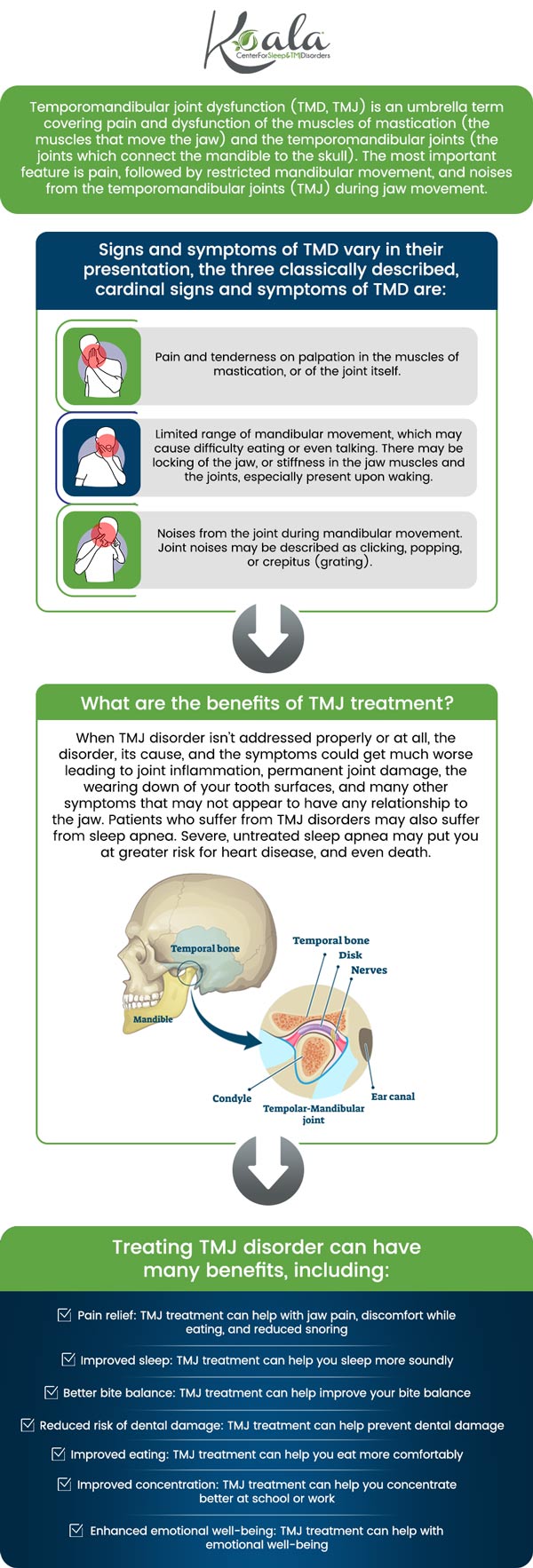
Table of Contents:
What are the earliest signs of TMJ disorder?
Can jaw stiffness or difficulty chewing signal TMJ onset?
Are headaches or ear pain early warning signs of TMJ?
How do specialists at Koala Center for Sleep Disorders help manage early TMJ symptoms?
At Koala Center for Sleep Disorders, we know that jaw pain and sleep problems often go hand-in-hand. The earliest signs of TMJ (temporomandibular joint) disorder can be subtle and are sometimes mistaken for other conditions, including those that disrupt healthy sleep.
Common early symptoms include discomfort or pain in the jaw, especially while chewing, talking, or yawning. This pain is often felt near the ear or along the sides of the face. You may also notice clicking, popping, or grating sounds when opening or closing your mouth—even if these sounds are not accompanied by pain, they can signal joint irregularity. Stiffness or tightness in the jaw muscles, making it difficult to open your mouth fully, is another early indicator.
TMJ disorder can also cause headaches (particularly around the temples) or earaches that are not related to ear infections. Some people experience swelling on the side of the face or notice a change in how their upper and lower teeth fit together.
Why is this so important? TMJ disorder is not just a jaw issue—it can affect your quality of sleep. Jaw pain, muscle tension, and misalignment can contribute to teeth grinding (bruxism), sleep disturbances, and even sleep apnea. Early recognition and intervention can help prevent these problems from worsening and support better sleep and overall health.
Jaw stiffness and difficulty chewing can be early indicators of temporomandibular joint (TMJ) disorders—a condition we frequently evaluate and manage at Koala Center for Sleep Disorders. The temporomandibular joint connects your jawbone to your skull and is essential for movements such as talking, chewing, and yawning. When this joint or the surrounding muscles become inflamed or dysfunctional, and you may experience symptoms like jaw pain, clicking or popping sounds, limited movement, and stiffness.
Difficulty chewing may arise when the muscles that control your jaw are strained or the joint isn’t functioning properly. While these symptoms can sometimes be caused by dental problems, arthritis, or injury, persistent jaw stiffness and trouble chewing should not be ignored, especially because TMJ disorders are often linked to other conditions we treat, including sleep apnea and chronic snoring.
At Koala Center for Sleep Disorders, our team is experienced in identifying and treating TMJ disorders, which can often be managed through conservative therapies such as jaw rest, gentle exercises, and custom oral appliance therapy. We recognize that TMJ symptoms can impact sleep quality and overall well-being, so we take a comprehensive approach to evaluation and treatment.
If you are experiencing ongoing jaw stiffness, difficulty chewing, or additional symptoms like jaw pain, headaches, or ear discomfort, we encourage you to schedule a consultation with our providers. Early diagnosis and personalized treatment can help prevent progression, relieve pain, and improve your quality of life—both day and night.
The TMJ is the hinge that connects your jawbone to your skull, playing a crucial role in chewing, speaking, and even breathing. When this joint or the surrounding muscles become dysfunctional, they can lead to a wide range of symptoms. Headaches—especially those that feel like tension or pressure around the temples, jaw, or sides of the head—are often linked to TMJ disorders. This happens because the muscles involved in jaw movement are closely connected to those in the head and neck. If you clench or grind your teeth (a condition known as bruxism, which is often related to sleep disorders), these muscles can become fatigued and tense, leading to frequent headaches.
Ear pain is another frequent complaint in patients with TMJ disorders. Because the TMJ is located just in front of the ear, inflammation or misalignment can produce pain that feels like it’s coming from the ear itself. You might also notice a sense of fullness, ringing (tinnitus), or even dizziness—symptoms that are often mistaken for ear infections but may actually be rooted in TMJ dysfunction.
At Koala Center for Sleep Disorders, we specialize in identifying and treating the underlying causes of TMJ disorders, especially when they are connected to sleep-disordered breathing, teeth grinding, and airway issues. If you are experiencing headaches, ear pain, jaw discomfort, clicking or popping sounds in your jaw, or difficulty opening and closing your mouth, it’s important to seek a comprehensive evaluation. Our team uses advanced diagnostic methods to determine the connection between your symptoms and TMJ or sleep disorders.
Early diagnosis and personalized treatment—often including oral appliance therapy tailored to your needs—can help alleviate your pain, protect your jaw joint, and improve your overall quality of life and sleep.
At Koala Center for Sleep Disorders, our specialists recognize the important connection between quality sleep and jaw health, especially when it comes to early TMJ (temporomandibular joint) symptoms. Our approach begins with a comprehensive evaluation, including a detailed medical and sleep history, a discussion of your symptoms, and a physical examination of the jaw and related structures. This helps us identify not only dental or jaw issues, such as misalignment or teeth grinding, but also sleep-related factors that may contribute to your discomfort.
Because TMJ symptoms are often linked with sleep disturbances—like bruxism (teeth grinding at night), obstructive sleep apnea, or poor sleep posture—our team at Koala Center is uniquely equipped to provide integrated care. We focus on conservative, non-invasive treatments tailored to your specific needs. Education is a key component of our care: you’ll learn about self-care techniques and lifestyle adjustments, such as avoiding hard foods, practicing gentle jaw exercises, and managing stress, all of which can relieve TMJ discomfort.
One of our primary tools is the use of custom oral appliances. Unlike standard nightguards, our appliances are designed not only to relieve strain on the jaw but also to promote optimal breathing and airway support during sleep. This dual benefit is especially important for patients whose TMJ symptoms are related to nighttime teeth grinding or underlying sleep disorders.
Throughout your treatment, our team provides ongoing support and follow-up care, monitoring your progress and adjusting your plan as needed. For more information, please contact us today or request an appointment online. We are conveniently located at 2309 E. Empire St. Ste 500 Bloomington, IL 61704.
Check Out Our 5 Star Reviews


Additional Services You May Need
▸ KoalaKIDZzz®
▸ Sleep Apnea
▸ Snoring
▸ TMJ Disorder
▸ Fatigue
▸ Sleep Disorders
▸ Weight Loss
▸ CPAP Alternative
▸ Oral Appliances


 Send Text
 How May I Help You?