

Are Sleep Disorders Genetic?
At Koala® Center For Sleep & TMJ Disorders, our sleep doctors understand that sleep disorders are not always caused by environmental factors like stress or poor sleep hygiene; they can often be deeply rooted in your genetics. Scientific research shows that conditions such as insomnia and sleep apnea can be hereditary, meaning they are passed down through generations. Some individuals inherit specific genes that increase stress-reactivity, making it much harder to fall asleep and stay asleep. Poor sleep can then negatively impact normal gene function, creating a vicious cycle of sleep deprivation. For more information, please contact us today or request an appointment online. We have convenient locations in Bloomington IL, Peoria/Dunlap IL, El Paso TX, and Wausau WI.
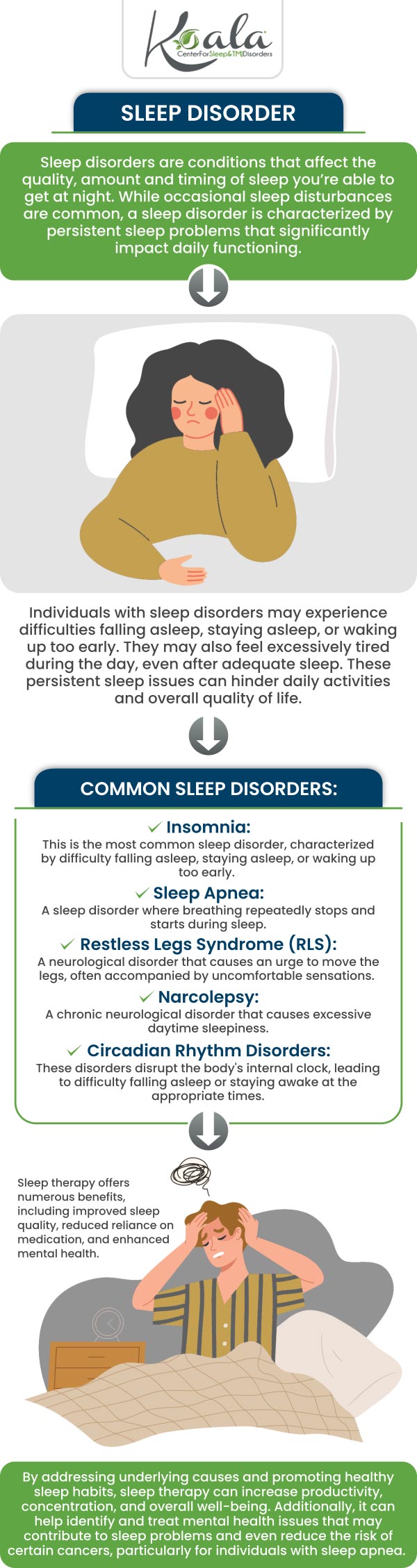
Table of Contents:
Do sleep disorders run in families?
What are the main causes of sleep disorders?
Are sleep disorders psychological or biological?
Can Hereditary Sleep Disorders Be Effectively Treated?
How does Koala® Center For Sleep & TMJ Disorders diagnose and treat genetic sleep apnea?
Sleep disorders come in a wide variety of forms, with some being common, affecting a few percent of the population, and others being rare, affecting a small number of people. While some sleep disorders have social or societal causes, others are hereditary and are passed down genetically from parent to child.
Yes, sleep disorders such as insomnia and sleep apnea can absolutely run in families. At Koala® Center For Sleep & TMJ Disorders, we frequently treat patients whose chronic sleep issues stem from hereditary factors rather than just environmental triggers. Science has shown that insomnia can be genetic, passed down from generation to generation. Certain individuals inherit specific genes that naturally increase their baseline stress-reactivity, making their nervous system more prone to anxiety. This heightened state of arousal makes it incredibly difficult to relax and fall asleep at night.
Unfortunately, chronic sleep deprivation can further disrupt normal gene function, trapping you in a frustrating cycle of exhaustion. While genetics play a massive role, environmental factors within a household can also activate these sleep problems. If you have a family history of sleep struggles, it is crucial to seek a professional evaluation. Our dedicated medical staff at Koala® Center For Sleep & TMJ Disorders can help identify these underlying genetic links and design a personalized treatment plan to restore your sleep.
There are many conditions, diseases, and disorders that can affect one’s quality of sleep. Sleep disorders may develop as the result of an underlying health problem, which would require a professional evaluation to diagnose.
Allergies and respiratory problems — Allergies, colds, and respiratory infections can obstruct airflow, making it challenging to breathe at night. If a person is unable to breathe through their nose, they may also experience sleeping difficulties.
Frequent urination — The frequent need to urinate at night is known as nocturia, which can cause disruptions to sleep by causing a person to wake up during the night. This can occur multiple times per night. Contributing factors to this condition include hormonal imbalances and diseases of the urinary tract. If frequent urination is accompanied by bleeding or pain, seek the attention of a medical professional right away.
Chronic pain — Constant pain can make it difficult to fall asleep and can even cause someone to wake up after they have fallen asleep. Common causes of chronic pain include:
– Arthritis
– Chronic fatigue syndrome
– Fibromyalgia
– Inflammatory bowel disease (IBS)
– Persistent headaches
– Continuous lower back pain
– TMJ pain
In some cases, sleep disorders can even exacerbate chronic pain.
Stress and anxiety — Mental health has a significant impact on quality of sleep. When experiencing stress and anxiety, sleep quality is often negatively impacted. This can cause difficulties falling or staying asleep.
Sleep disorders are complex conditions that can be both biological and psychological. At Koala® Center For Sleep & TMJ Disorders, we take a comprehensive approach because sleep difficulties are often inextricably linked to both areas. From a psychological standpoint, chronic stress, anxiety, and depression have a significant negative impact on sleep quality. Conversely, poor sleep can exacerbate or even trigger these mental health conditions. From a biological perspective, anatomical issues like a narrow airway, chronic pain conditions like TMJ disorder, or a genetic predisposition to insomnia can physically prevent your body from achieving restorative sleep.
Because sleep problems can be passed down genetically to your children and affect multiple generations, treating them requires understanding the full picture. Our expert clinicians at Koala® Center For Sleep & TMJ Disorders evaluate all contributing biological and psychological factors. By addressing the root cause—whether it is an inherited jaw structure, chronic pain, or neurological stress—we offer effective, non-invasive solutions to help you overcome your biological or psychological sleep challenges completely.
While you cannot change the underlying DNA that predisposes you to sleep issues, genetic sleep disorders can be highly effectively managed and treated. A family history of insomnia, sleep apnea, or TMJ disorder does not mean you are sentenced to a lifetime of exhaustion. Because many genetic sleep disorders are linked to physical anatomy—such as an inherited jaw structure causing airway collapse or chronic jaw pain—the focus must be on treating the mechanical root of the problem. Rather than relying on temporary medications for inherited sleep disturbances, customized oral appliances can be designed to naturally keep the airway open and decompress the jaw joints. Furthermore, working with a specialist will help you manage the environmental triggers and daily stress factors that often activate these genetic predispositions. By addressing your biological anatomy directly, you can successfully overcome your hereditary sleep disorder symptoms, prevent long-term cardiovascular stress, and achieve restorative rest.
Obstructive sleep apnea (OSA) is highly hereditary and frequently runs in families due to inherited facial and airway structures. Our sleep doctors thoroughly evaluate how your family history impacts your current sleep health. Genetics largely dictate the physical anatomy of your face, jaw, and airway. If your parents possess a naturally narrow upper airway, a recessed lower jaw, a large tongue base, or excess soft tissue in the throat, you have a high probability of inheriting those exact physical characteristics. These inherited structural issues make it much more likely that your airway will collapse during sleep, leading to loud snoring and dangerous pauses in breathing.
Because the root cause is often your genetic anatomy, our expert clinicians utilize custom oral appliance therapy to gently shift the jaw forward and expand the airway. This targeted treatment directly counteracts the inherited anatomical traits causing your sleep apnea, helping you breathe easily and sleep soundly without a CPAP machine. If you have questions about genetics and how they may be related to sleep disorders, come to Koala® Center For Sleep & TMJ Disorders to find the answers you need. Our kind and compassionate professionals are dedicated to providing the highest level of care for every patient. Trust our sleep specialists with your questions and concerns. For more information, please contact us today or request an appointment online. We have convenient locations in Bloomington IL, Peoria/Dunlap IL, El Paso TX, and Wausau WI.

Additional Services You May Need
▸ KoalaKIDZzz®
▸ Sleep Apnea
▸ Snoring
▸ TMJ Disorder
▸ Fatigue
▸ Sleep Disorders
▸ Weight Loss
▸ CPAP Alternative
▸ Oral Appliances


 Send Text
 How May I Help You?