

How Is Fatigue Connected to Obstructive Sleep Apnea?
Feeling constantly tired despite getting “enough sleep” can be frustrating and confusing. For many, the underlying cause of this persistent fatigue isn’t poor sleep hygiene — it’s Obstructive Sleep Apnea (OSA). At Koala Center For Sleep & TMJ Disorders, our team helps patients understand how sleep apnea disrupts rest and leads to ongoing fatigue, as well as how it’s diagnosed and treated. For more information, please contact us today or request an appointment online. We have convenient locations in Bloomington IL, Peoria/Dunlap IL, El Paso TX, and Wausau WI.
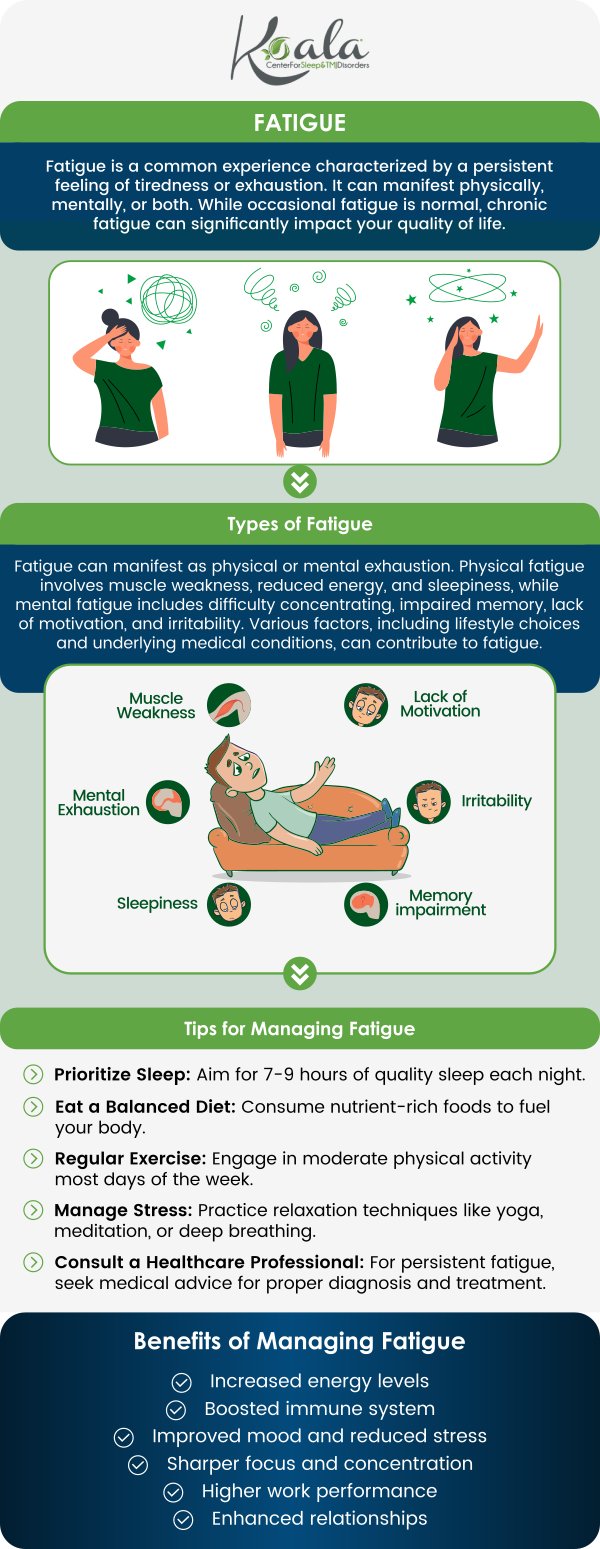
Table of Contents:
How does obstructive sleep apnea cause fatigue?
How is obstructive sleep apnea diagnosed?
What are common symptoms of obstructive sleep apnea besides fatigue?
Can sleep apnea fatigue be mistaken for normal tiredness?
Can Koala Center for Sleep & TMJ Disorders diagnose whether my sinus pressure is from sinus disease or TMJ?
Obstructive Sleep Apnea (OSA) is a sleep disorder in which the airway repeatedly collapses or becomes blocked during sleep. These blockages can last a few seconds to over a minute, causing brief interruptions in breathing called apneas. While these pauses may not fully awaken you, they do fragment your sleep cycle and prevent you from reaching the deep, restorative stages of sleep your body needs.
Here’s how OSA leads to fatigue:
1. Frequent Sleep Interruptions
Each apneic event forces your brain to wake up just enough to resume breathing. These micro‑awakenings happen multiple times per hour — sometimes hundreds of times during the night — but are so brief that you might not remember them the next morning.
2. Reduced Deep Sleep
Deep sleep (also known as slow‑wave sleep) and REM sleep are critical for physical and mental restoration. OSA interrupts these stages repeatedly, leaving your body and brain under‑rested despite hours spent in bed.
3. Increased Daytime Sleepiness
Because your sleep is constantly disrupted, your body doesn’t get the restorative rest it needs. This results in daytime sleepiness, difficulty concentrating, memory issues, and low energy levels — all classic symptoms of sleep apnea fatigue.
4. Oxygen Desaturation
During apneas, oxygen levels in the blood can drop. This forces the body to react by increasing stress hormones and heart rate, which further disrupts sleep quality and contributes to fatigue.
In essence, OSA prevents your body from ever completing a full, restorative sleep cycle — and the result is chronic exhaustion, even if you think you’re “sleeping enough.”
Diagnosis of obstructive sleep apnea involves a comprehensive evaluation that begins with a detailed review of your symptoms and health history. At Koala Center For Sleep & TMJ Disorders, our team takes a thorough approach to ensure accurate identification of OSA.
Here’s how we diagnose obstructive sleep apnea:
1. Clinical Interview and Symptom Review
We start by listening to your description of symptoms — including daytime fatigue, snoring, witnessed breathing pauses, morning headaches, and feelings of unrestful sleep.
2. Physical Examination
We examine your airway, jaw structure, neck size, and any anatomical features that may contribute to airway obstruction. Because the jaw and airway are closely connected, this evaluation often provides valuable clues.
3. Sleep Study (Polysomnography)
A sleep study is the gold standard for diagnosing OSA. This can be done in a lab or with an at‑home testing device prescribed by our team. The test measures:
• Breathing patterns
• Oxygen levels
• Heart rate
• Sleep stages
• Body movements
The data collected helps determine the severity of your sleep apnea and guides treatment decisions.
4. Interdisciplinary Evaluation
Since OSA can share features with other conditions like TMJ dysfunction or sinus issues, our team considers overlapping symptoms to ensure the diagnosis is accurate and comprehensive.
Once your sleep apnea diagnosis is confirmed, we work with you to create a personalized treatment plan aimed at reducing symptoms — including fatigue — and improving overall health and quality of life.
While fatigue is one of the most common symptoms of obstructive sleep apnea, it’s just one piece of a larger constellation of signs that may indicate the disorder. Other frequently reported symptoms include:
1. Loud or Frequent Snoring
Persistent, loud snoring is one of the most recognizable symptoms, especially when accompanied by observed breathing pauses.
2. Gasping or Choking During Sleep
Many patients awaken feeling like they’re gasping for air or choking, often without remembering why.
3. Morning Headaches
Frequent headaches upon waking are common due to poor oxygenation and disrupted sleep cycles.
4. Difficulty Concentrating or Memory Problems
Chronic lack of restorative sleep impacts cognitive function, making it harder to focus, retain information, or perform daily tasks.
5. Mood Changes, Irritability, or Depression
Sleep apnea can affect emotional regulation, leading to mood swings or increased irritability.
6. Frequent Nighttime Urination (Nocturia)
Waking up several times at night to urinate can be linked to sleep apnea.
7. Dry Mouth or Sore Throat in the Morning
Breathing through the mouth during sleep often leads to dryness and discomfort upon waking.
Patients often overlook these symptoms or attribute them to stress or aging, but when they occur together — especially with fatigue — it’s important to explore the possibility of sleep apnea.
Absolutely. One of the reasons obstructive sleep apnea often goes undiagnosed is that its fatigue can resemble everyday tiredness. You may feel:
• Sleepy during the afternoon
• Unable to focus at work
• Overwhelmed by tasks that used to seem easy
• Constantly craving caffeine
However, sleep apnea fatigue differs from normal tiredness in several ways:
1. It doesn’t improve with more sleep.
While most people feel refreshed after a good night’s sleep, someone with OSA may still feel exhausted even after 8–10 hours in bed.
2. It interferes with daily activities.
You may struggle to stay awake during meetings, while driving, or during quiet activities — situations that ordinary tiredness doesn’t typically affect so severely.
3. It’s chronic.
Normal tiredness is temporary and often linked to specific causes (late nights, stress, illness). With OSA, the fatigue tends to be long‑lasting and persistent.
4. It comes with other symptoms.
When fatigue occurs alongside loud snoring, morning headaches, irritability, or observed breathing interruptions, a more serious condition like obstructive sleep apnea may be to blame.
Yes — and this is one of the areas where Koala Center For Sleep & TMJ Disorders really shines. Many patients come in thinking their facial pressure, headaches, or sinus discomfort stems from sinus disease, when in fact the underlying cause may be TMJ dysfunction or a combination of conditions.
While sinus issues and TMJ problems can both produce similar sensations — such as pressure around the forehead, cheeks, and behind the eyes — the treatments for each are very different. Misdiagnosis can delay relief and lead to unnecessary treatments.
Here’s how our team differentiates between them:
1. Detailed Symptom Analysis
We start by carefully reviewing your symptoms, including when they occur, what makes them worse, and how they relate to jaw function.
2. Functional Jaw and Sleep Evaluation
Because TMJ disorders often affect how the jaw moves and how the airway functions during sleep, we evaluate bite alignment, joint motion, muscle tension, and sleep patterns.
3. Targeted Physical Exams
We examine areas around the nasal passages, jaw joints, and muscles to identify whether tension or structural issues may be referring pain to sinus‑like regions.
4. Diagnostic Testing if Needed
In some cases, imaging or collaboration with an ENT specialist is used to rule out true sinus pathology and confirm whether TMJ or sleep apnea is a contributing factor.
Fatigue that doesn’t respond to more sleep, rest, or lifestyle changes isn’t “just tiredness.” When it’s connected to obstructive sleep apnea, it can significantly impact your quality of life, cognitive function, and overall health. By understanding how sleep apnea interrupts your sleep cycles and leads to persistent fatigue, you can take the first step toward relief.
If you’re experiencing chronic tiredness, morning headaches, loud snoring, or other symptoms associated with OSA — or if you suspect your sinus pressure may actually be related to TMJ or sleep apnea — contact Koala Center For Sleep & TMJ Disorders. Our team is here to help you get answers, an accurate diagnosis, and a personalized treatment plan that targets the root of the problem — not just the symptoms.

Additional Services You May Need
▸ KoalaKIDZzz®
▸ Sleep Apnea
▸ Snoring
▸ TMJ Disorder
▸ Fatigue
▸ Sleep Disorders
▸ Weight Loss
▸ CPAP Alternative
▸ Oral Appliances


 Send Text
 How May I Help You?