

How Can I Safely Manage My Child’s Parasomnias in El Paso, TX?
Managing a child’s parasomnias, like sleepwalking or night terrors, can be stressful and often raises safety concerns for parents. At Koala® Center for Sleep & TMJ Disorders, our goal is to provide evidence-based, tailored strategies through our KoalaKIDZzz® program. Our providers specialize in creating personalized safety plans and treatment protocols to ensure your child gets restful, uninterrupted sleep. For more information, please contact us today or request an appointment online. We have convenient locations in Bloomington IL, Peoria/Dunlap IL, Mishawaka IN, El Paso TX, and Wausau WI.
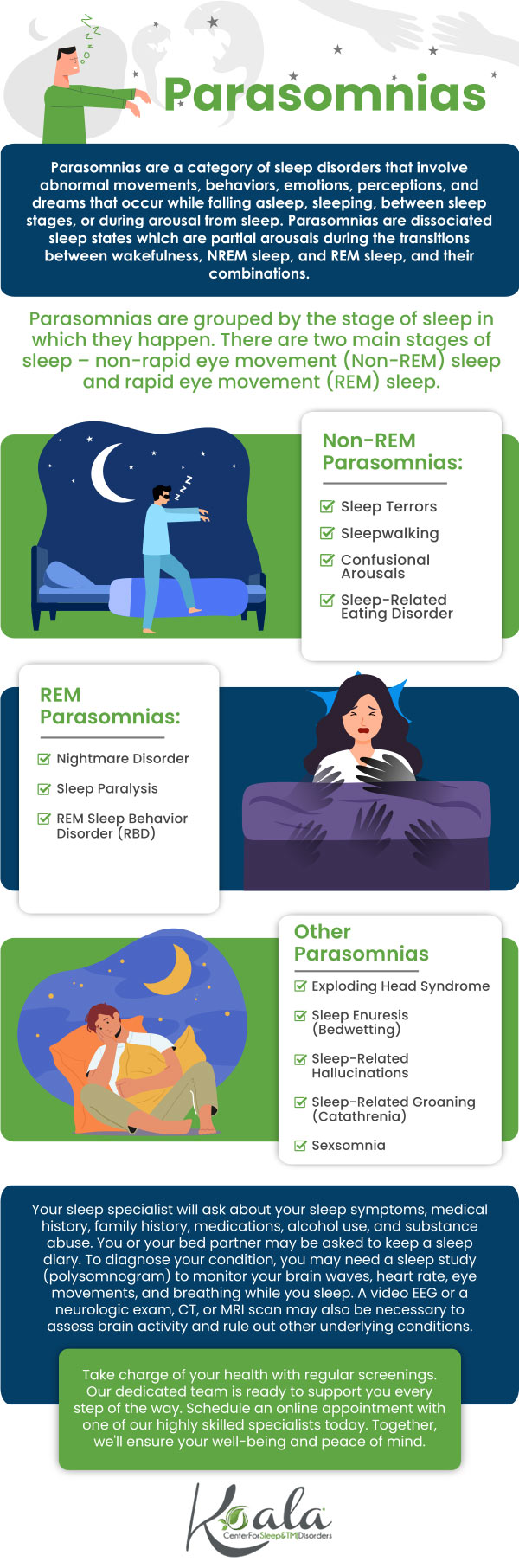
Table of Contents:
Is a parasomnia normal for my child’s age, or does it signal a deeper issue?
What are the most common triggers of parasomnias?
What safety precautions should we take in the house and bedroom to manage my child’s parasomnia?
How do I safely guide my child back to bed without making the parasomnia episode worse?
The KoalaKIDZzz® Difference: Diagnosing and Treating Complex Parasomnias
Parasomnias—such as sleepwalking, night terrors, confusional arousals, and sleep talking—can be unsettling for families, especially when episodes happen suddenly or frequently. Many parents wonder whether these behaviors are harmless parts of childhood development or signs of a deeper sleep disorder. At Koala® Center for Sleep & TMJ Disorders in El Paso, our KoalaKIDZzz® program provides evidence-based evaluation and care tailored specifically to pediatric sleep disturbances. Understanding the triggers, warning signs, and proper responses can help you keep your child safe while supporting healthier sleep patterns.
Parasomnias are surprisingly common among children, and many episodes fall within the range of normal developmental sleep behaviors. Sleepwalking and night terrors, for example, often occur in kids between the ages of 3 and 12, especially during growth phases when sleep cycles are still maturing. These events typically happen in deep non-REM sleep, when the brain partially “wakes up” without full awareness.
However, some parasomnias do require more careful evaluation. You may want to seek a professional assessment if:
● Episodes occur several nights per week
● Your child becomes physically aggressive or highly agitated
● The behavior persists beyond the typical age range
● Your child is excessively sleepy during the day
● There are signs of breathing pauses, snoring, or gasping during sleep
In these cases, parasomnias may be linked to an underlying sleep disorder such as obstructive sleep apnea, restless sleep disorder, or insufficient sleep hygiene. At Koala® Center for Sleep & TMJ Disorders, our clinicians use pediatric-focused diagnostic tools to determine whether your child’s episodes are benign or part of a broader sleep condition requiring treatment.
Parasomnias often occur when something disrupts normal sleep architecture. Identifying the trigger can make a significant difference in reducing episode frequency. Some of the most common triggers include:
● Sleep deprivation: One of the most consistent causes of parasomnia behaviors
● Stress or rapid changes in routine: School transitions, illness, travel, and family stress
● Fever or illness: Elevated body temperature alters sleep stages
● Full bladder at night: May trigger partial arousals during deep sleep
● Obstructive sleep apnea: Can fragment sleep and increase night terrors or sleepwalking
● Certain medications: Especially those that affect the central nervous system
Because triggers vary from child to child, KoalaKIDZzz® clinicians take time to review your child’s sleep habits, medical history, nighttime environment, and daily routines to identify patterns that may be aggravating the parasomnia.
Safety is one of the biggest concerns parents face when dealing with sleepwalking or night terrors. These episodes typically involve automatic behaviors with limited awareness, which increases the risk of accidents. While every home setup is different, some universally recommended precautions include:
● Installing childproof locks or alarms on exterior doors
● Keeping windows locked or secured with safety latches
● Removing tripping hazards such as cords, clutter, or low furniture
● Using baby gates at the top of stairs
● Ensuring your child sleeps on the lowest bed possible (avoiding bunk beds)
● Keeping sharp or breakable objects out of reach
These steps help create a safe environment so that if an episode occurs, the risk of injury remains minimal. Koala® Center for Sleep & TMJ Disorders can provide additional personalized safety recommendations during your visit based on your home layout and your child’s specific behaviors.
Parents often feel anxious when they see their child wandering, crying, or appearing distressed during a parasomnia episode. However, the safest approach is calm, gentle, and non-confrontational. Avoid trying to fully awaken your child unless absolutely necessary. Waking them abruptly may increase confusion, prolong agitation, or trigger additional episodes.
Instead, follow these steps:
1. Approach quietly and stay at their side to prevent accidents.
2. Speak in a low, soothing voice.
3. Guide them slowly back toward their bedroom without forcing or restraining them.
4. Help them lie down safely and allow the episode to pass naturally.
Most children do not remember the event the next morning, and parents should avoid discussing it in a way that causes fear or embarrassment. Over time, tracking the timing and frequency of the episodes can help your sleep specialist identify whether there is an underlying sleep disruption contributing to the pattern.
Koala® Center for Sleep & TMJ Disorders is one of the few pediatric-focused sleep programs in the El Paso region offering comprehensive evaluation and treatment for parasomnias. Our KoalaKIDZzz® system takes a multidisciplinary approach that goes far beyond simply “monitoring” episodes.
Your child’s care may include:
● Expert pediatric sleep evaluation: Assessing nighttime behaviors, breathing patterns, and neurological cues
● Advanced diagnostic sleep studies (when needed): To rule out disorders such as sleep apnea, periodic limb movement disorder, or nocturnal seizures
● Customized sleep hygiene plans: Creating routines that stabilize nighttime rest and reduce triggers
● Behavioral strategies for families: Step-by-step guidance to reduce episode frequency and increase safety
● Medical treatment options: Only when appropriate, based on each child’s sleep architecture and underlying diagnosis
KoalaKIDZzz® is designed to give families clarity, reassurance, and a concrete plan for restoring healthier sleep. With the right guidance, most children experience fewer episodes and significantly improved sleep quality over time.
Check Out Our 5 Star Reviews


Additional Services You May Need
▸ KoalaKIDZzz®
▸ Sleep Apnea
▸ Snoring
▸ TMJ Disorder
▸ Fatigue
▸ Sleep Disorders
▸ Weight Loss
▸ CPAP Alternative
▸ Oral Appliances


 Send Text
 How May I Help You?