

Is Your Child’s Nighttime Behavior Normal or a Sign of Parasomnia?
It can be frightening to see your child thrashing, screaming, or walking while completely asleep. Unlike common nightmares, these behaviors—known as parasomnias—happen when a child is “stuck” between sleep stages and they won’t remember the event. At the Koala® Center For Sleep & TMJ Disorders, our specialist recognizes that while often harmless, frequent parasomnias can be a sign of an underlying issue, such as sleep-disordered breathing. If you’re concerned about your child’s disruptive sleep behaviors, we can help investigate the root cause. For more information, contact us or book an appointment online. We serve patients from 413 North 17th Avenue Ste 100 Wausau, WI 54401 and surrounding areas.
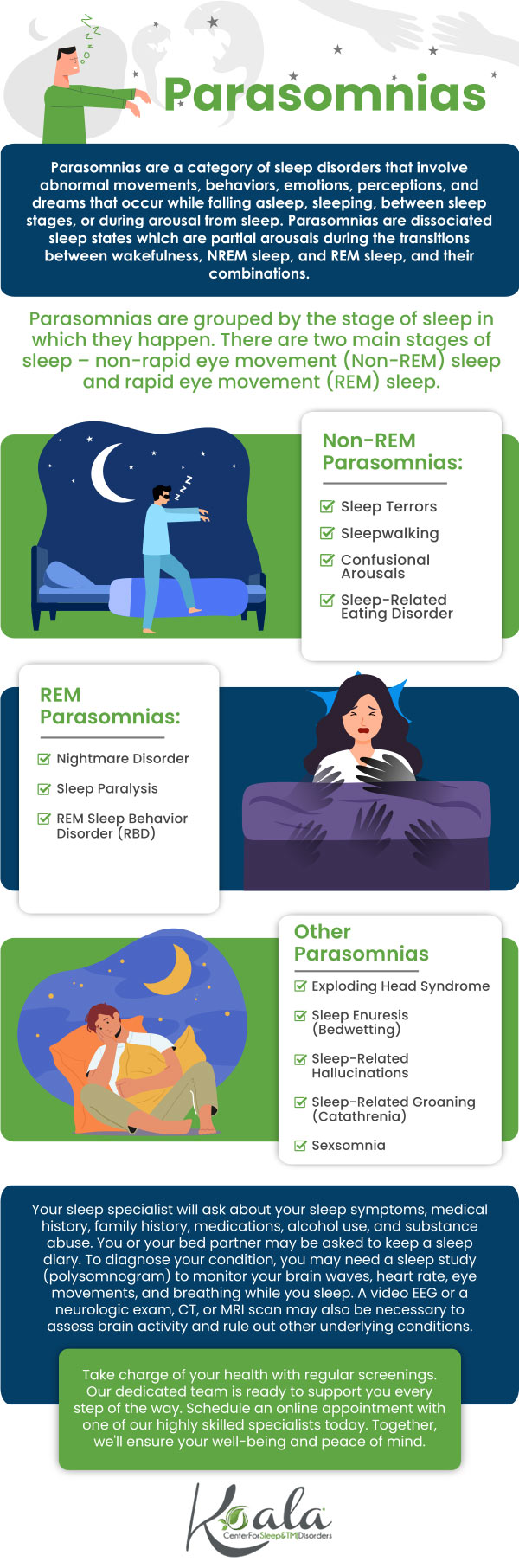
Table of Contents:
What is parasomnia, and how does it affect children’s sleep?
How can parents tell the difference between normal sleep disturbances and parasomnia?
When Should You Be Concerned?
At what age do parasomnias typically occur, and do children outgrow them?
Are parasomnias harmful or dangerous for a child’s health?
How can Koala Sleep Center Help My Child?
Parasomnia refers to a group of sleep disorders characterized by abnormal movements, behaviors, or experiences that occur while falling asleep, during sleep, or while waking up. These disturbances can include sleepwalking, night terrors, confusional arousals, nightmares, and talking during sleep. Parasomnias are especially common in children, often occurring during the transition between different stages of sleep, particularly between deep sleep and lighter sleep or wakefulness.
In children, parasomnias may present as episodes where a child sits up in bed, appears confused or frightened, walks around while still asleep, or even screams during the night. These events can be distressing for both the child and their caregivers, but children usually have little or no memory of the incident the next morning. While parasomnias are generally considered benign and tend to resolve as the child grows older, frequent or severe episodes can lead to fragmented sleep and daytime sleepiness, potentially affecting mood, behavior, and learning. In rare cases, parasomnias can result in injury if the child acts out physically during an episode.
We understand that sleep issues in children can be a source of worry for parents. Distinguishing between typical childhood sleep disturbances and more serious conditions like parasomnias is essential for ensuring your child receives the right care.
Normal Sleep Disturbances vs. Parasomnias
Many children experience occasional sleep problems, such as nightmares, brief awakenings, or trouble falling asleep. These are generally considered normal and tend to resolve on their own without affecting your child’s daytime energy, mood, or attention.
Parasomnias, however, are a group of sleep disorders that involve abnormal behaviors or experiences during sleep—such as sleepwalking, night terrors, or confusional arousals. These episodes can be dramatic and upsetting to witness. For example, during a night terror, a child may suddenly sit up, scream, or appear terrified, yet remain difficult to comfort and not remember the event in the morning. Sleepwalking may involve wandering around the house with a blank or confused expression.
Parasomnias are distinct from typical sleep disturbances in several ways:
● Timing: Parasomnias usually occur during the first few hours of the night (deep non-REM sleep), while nightmares happen later during REM sleep and are often vividly remembered.
● Behaviors: Episodes of walking, talking, or intense agitation during sleep—especially without memory of the event—are signs of parasomnia.
● Impact: While normal sleep issues rarely affect daytime functioning, frequent parasomnias can impact your child’s mood, attention, or school performance due to disrupted sleep.
When to Seek Professional Help
If your child frequently exhibits unusual, intense, or dangerous behaviors during sleep, or if you notice significant changes in their mood or daily functioning, it’s important to seek professional guidance. At Koala® Center For Sleep & TMJ Disorders, our team specializes in evaluating and treating sleep disorders in children. We can help determine whether your child’s symptoms fall within the range of normal childhood sleep or if a more thorough assessment and targeted intervention is needed.
At Koala® Center, we understand how concerning it can be for parents to witness their child experiencing unusual behaviors during sleep. Parasomnias are a group of sleep disorders that include abnormal movements, behaviors, emotions, perceptions, or dreams while falling asleep, during sleep, or upon awakening. The most common parasomnias in children are sleepwalking, night terrors, and confusional arousals. These typically occur between the ages of 3 and 8 and are often considered a normal part of childhood development as the brain matures and sleep patterns change.
Most children will outgrow parasomnias as they get older, with episodes decreasing in frequency and severity—often resolving by late childhood or early adolescence. Occasional events may still occur, especially during stressful periods or when sleep is disrupted.
However, persistent or severe parasomnias, especially those that involve dangerous behaviors or lead to significant daytime sleepiness or impairment, may be a sign of an underlying sleep disorder. Sometimes, conditions such as obstructive sleep apnea, TMJ (temporomandibular joint) disorders, or other airway and sleep-related issues can contribute to or worsen parasomnias. Our team specializes in identifying and treating these underlying causes, helping your child achieve restful, restorative sleep.
Parasomnias—such as sleepwalking, night terrors, and confusional arousals—are relatively common sleep disorders in children. While most parasomnias are benign and often resolve as a child grows, they can occasionally lead to safety concerns, particularly when a child is at risk of accidental injury during an episode. We understand that sleep disorders in children can be both distressing for families and disruptive to a child’s health and development.
While parasomnias typically do not cause direct harm to a child’s health, frequent or severe episodes can negatively affect sleep quality, leading to daytime sleepiness, behavioral challenges, or difficulties at school. Additionally, certain underlying sleep issues—such as obstructive sleep apnea or breathing-related sleep disturbances—can increase the likelihood of parasomnias.
Our team is experienced in evaluating and treating a wide range of pediatric sleep disorders. If your child experiences frequent, intense, or injurious parasomnias, or if their sleep disruptions are impacting their daily life, we encourage you to schedule a consultation. We can assess contributing factors such as airway obstruction, sleep apnea, or TMJ (jaw joint) disorders, all of which may impact healthy sleep patterns. Our comprehensive approach focuses on identifying the root causes and providing effective, compassionate care to help your child (and your family) get the restful sleep they need.
Our team of experienced providers—including dental sleep medicine specialists—conducts thorough evaluations to understand each child’s unique sleep patterns, medical history, and any symptoms related to TMJ dysfunction. Assessments may include sleep questionnaires, sleep diaries, airway evaluations, and, when appropriate, overnight sleep studies. We are equipped to diagnose common pediatric sleep disorders such as insomnia, sleep-disordered breathing (including obstructive sleep apnea), restless legs syndrome, and issues stemming from TMJ dysfunction.
Once a diagnosis is made, the Koala® Center team works closely with families to develop personalized treatment plans. These may include behavioral strategies, guidance on sleep hygiene, custom oral appliance therapy to address airway or TMJ concerns, and collaboration with your child’s pediatrician or other health professionals. Parents are provided with education and support to help manage bedtime routines, address issues like night terrors or bedwetting, and recognize the signs of TMJ-related problems.
If your child is experiencing frequent or severe parasomnias, contact Koala® Center For Sleep & TMJ Disorders. Early evaluation can help rule out underlying conditions and provide effective solutions to promote healthier, safer, and more restful sleep for your family. We serve patients from Wausau WI, Schofield WI, Weston WI, Rothschild WI, Brokaw WI, and surrounding areas.

Additional Services You May Need
▸ KoalaKIDZzz®
▸ Sleep Apnea
▸ Snoring
▸ TMJ Disorder
▸ Fatigue
▸ Sleep Disorders
▸ Weight Loss
▸ CPAP Alternative
▸ Oral Appliances


 Send Text
 How May I Help You?