

Types of Headaches: Symptoms, Causes, Treatments
Headaches are one of the most common medical complaints, and they are experienced by people of all ages, genders, and backgrounds. They can range in intensity from mild aches to severe and debilitating pain. Headaches are caused by a variety of factors, including stress, dehydration, emotional issues, physical injury, or medical conditions. If you are suffering from headaches, don’t delay and come to Koala® Center For Sleep & TMJ Disorders and talk to our providers. For more information, contact us or visit us online to book an appointment. We have convenient locations across the U.S. in Bloomington IL, Peoria/Dunlap IL, El Paso TX, and Wausau WI.
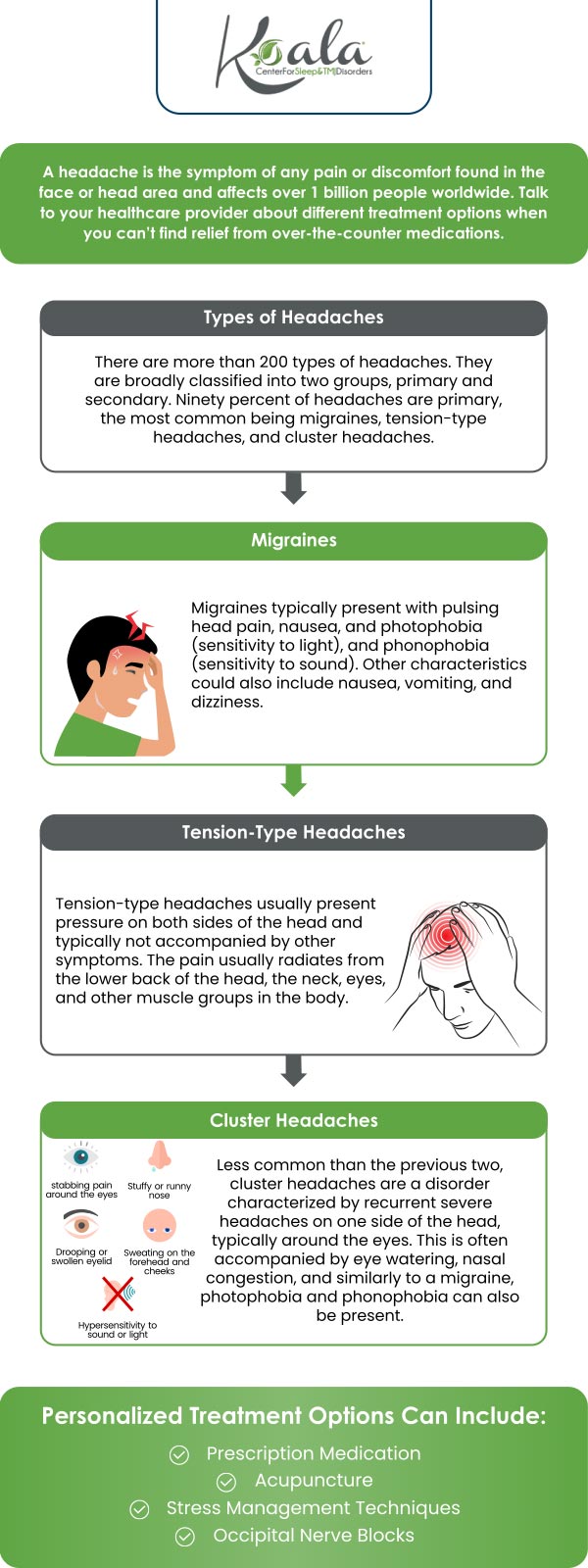
Table of Contents:
What are the types of headaches?
What type of headache should I worry about?
How can I identify my headache?
Why do I wake up with a headache every day?
How can you determine if your headache is related to sleep disorders or TMJ, and how can our team at Koala Center for Sleep Disorders help?
Headaches are a common medical condition that affect hundreds of millions of people around the world each year. There are many different types of headaches, each with its own unique characteristics that make it distinct from other types.
– Tension Headache — The most common type of headache is called a tension headache, which is caused by the tightening of the muscles in the neck and shoulders.
– Migraine Headache — Another type of headache is a migraine, which is characterized by a throbbing pain in one side of the head and is often accompanied by nausea and light sensitivity.
– Hypnic Headache — This rare type of headache affects people between the ages of 40 and 80 and occurs exclusively at night, hence its name.
– Cluster Headache — Cluster headaches are intense, short-lived bursts of pain, typically lasting only 5 minutes to two hours. They can occur several times a day for a period of days or weeks, then go away for weeks or months only to return later.
While most headaches are nothing to worry about and go away on their own with self-care, there are certain signs that may indicate there is a more serious underlying problem. These include:
– Recurring headaches
– Headaches that wake you up
– Throbbing pain
– Persistent headaches
Furthermore, a headache may be serious if it occurs alongside:
– sudden, very intense pain (thunderclap headache)
– severe or sharp headache pain
– a stiff neck and fever
– a fever higher than 102°F
– nausea and vomiting
– fainting
– dizziness or loss of balance
– pain that wakes you from sleep
– pain that gets worse when changing position
– persistent face tingling and auras
– confusion or difficulty understanding speech
– droopiness on one side of your face
– weakness on one side of your body
– slurred or garbled speech
– difficulty walking
– hearing problems
– pain that begins after any type of exertion, such as coughing, sneezing or laughing
– constant pain in the same area
– seizures
– unexplained weight loss
– swelling on your face or head
– a bump or injury on your head
– an animal bite anywhere on your body
While all headaches are characterized by pain or discomfort in the head/neck region, there are differences between them that can help you identify what kind you are experiencing. For example, tension headaches, which are the most common, typically cause a persistent pressure or ache on the temples, back of the head, or neck. Migraines are unique in that they cause auras, which are warnings that a migraine is about to occur, and may also cause nausea or vomiting. Cluster headaches occur in groups of intensely painful headaches and are often recurrent. A sinus headache is caused by excess pressure due to congestion in the sinuses and may be triggered by allergies.
In addition to these common types of headaches, it’s important to note that the pain’s intensity, location, and duration can provide further clues about the cause. For instance, hypnic headaches, also known as “alarm clock headaches,” typically occur at night and wake you up from sleep, often causing sharp pain that can last for hours. TMJ-related headaches may also arise due to jaw tension, which can radiate to the temples, face, or even the neck. If you experience jaw clicking, tooth sensitivity, or pain while chewing, these could be signs of TMJ dysfunction contributing to your headaches.
Waking up with a headache every day can significantly impact your daily life and overall well-being. In addition to dehydration, oversleeping or undersleeping, teeth grinding (bruxism), and sleep apnea, other potential causes include poor sleep posture, stress, and caffeine withdrawal. These headaches can be a sign that your sleep isn’t restful or restorative, and your body may be compensating for sleep disturbances.
Sleep apnea, in particular, restricts airflow during sleep, leading to oxygen deprivation, which can trigger morning headaches. Teeth grinding or jaw clenching can cause muscle tension in the jaw, leading to pain that radiates into the head. If you’re experiencing these symptoms regularly, it’s important to address the underlying issue to prevent long-term health problems.
At Koala Center for Sleep Disorders, our team of experts can help identify the cause of your headaches and recommend personalized treatments, such as a sleep study, TMJ therapy, or lifestyle adjustments. Don’t let daily headaches affect your life—contact us today to schedule an appointment and get the relief you deserve.
Headaches related to sleep disorders or TMJ (temporomandibular joint) disorders can feel different from typical headaches, and identifying their cause is key to finding relief. If you wake up with a headache frequently or experience them throughout the day, it could be related to issues like teeth grinding, jaw clenching, or poor sleep quality. TMJ headaches are often felt around the temples, jaw, or behind the eyes and are usually accompanied by jaw pain or discomfort, clicking, or popping sounds when you move your jaw.
Sleep disorders, such as sleep apnea, can also cause frequent morning headaches due to oxygen deprivation during sleep. These headaches are typically a sign that your body isn’t getting restful sleep, which can affect brain function and cause headaches upon waking. If your headaches are persistent, severe, or accompanied by other symptoms like snoring, choking, or difficulty breathing during sleep, it’s important to seek professional help.
At Koala Center for Sleep Disorders, our team specializes in diagnosing and treating headaches caused by sleep-related issues and TMJ disorders. Come to Koala® Center For Sleep & TMJ Disorders for top-level relief from headaches caused by TMJ disorder. For more information, contact us or visit us online to book an appointment. We have convenient locations across the U.S. in Bloomington IL, Peoria/Dunlap IL, Mishawaka IN, El Paso TX, and Wausau WI.

Additional Services You May Need
▸ KoalaKIDZzz®
▸ Sleep Apnea
▸ Snoring
▸ TMJ Disorder
▸ Fatigue
▸ Sleep Disorders
▸ Weight Loss
▸ CPAP Alternative
▸ Oral Appliances


 Send Text
 How May I Help You?