

How Can a Sleep Ring Help You Understand Your Sleep?
At Koala Center for Sleep & TMJ Disorders, our providers utilize the clinical-grade Sleep Ring to gather precise, continuous data about your sleep health from the comfort of your home. This advanced wearable technology monitors key vitals, providing the objective diagnostic information our specialists need to accurately uncover the root cause of your specific sleep disorder. For more information, please contact us today or request an appointment online. We have convenient locations in Bloomington IL, Peoria/Dunlap IL, El Paso TX, and Wausau WI.
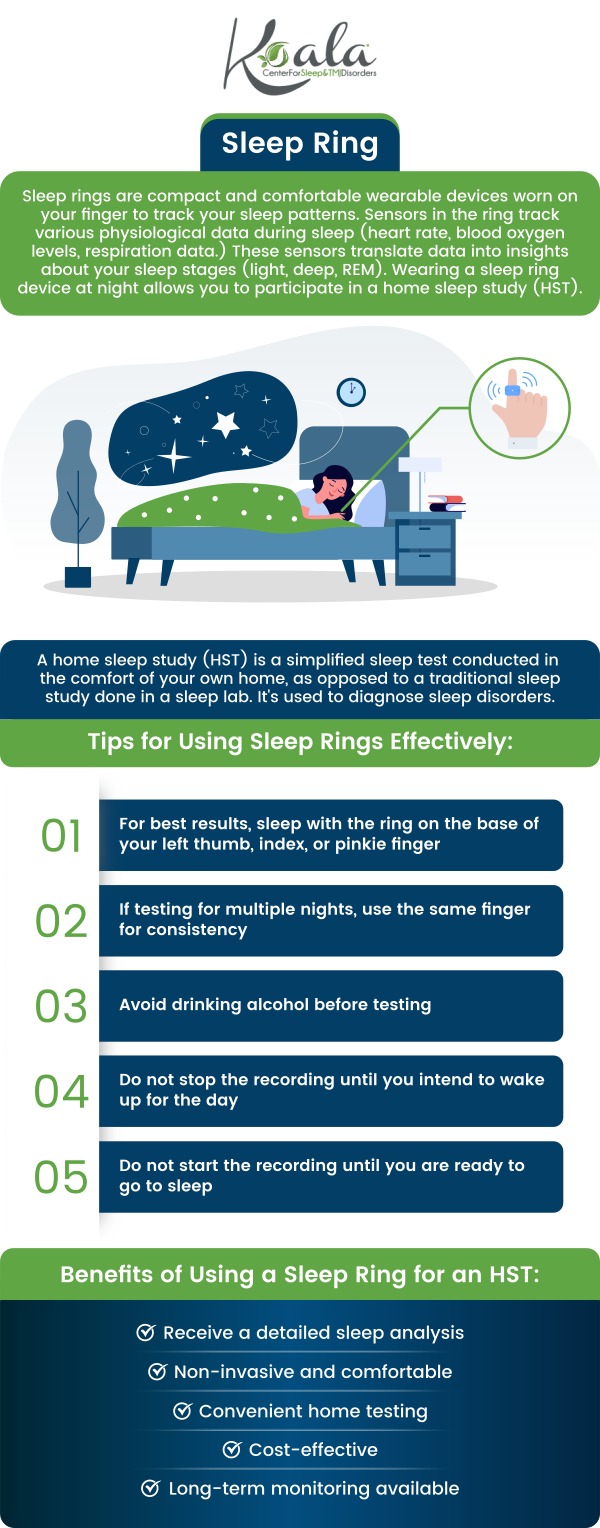
Table of Contents:
How accurate are sleep rings in tracking sleep patterns?
Do sleep rings help improve sleep quality?
Are sleep rings comfortable to wear during sleep?
Can sleep rings detect sleep disorders?
Track Your Sleep: The Sleep Ring Explained by Koala Center Experts
Quick FAQ
In today’s world of wearable technology, sleep rings have become a popular tool for tracking rest and understanding your sleep patterns. Unlike traditional watches or fitness trackers, sleep rings are worn on your finger and monitor multiple physiological signals while you sleep. At Koala Center for Sleep & TMJ Disorders, we explore how sleep rings work, their limitations, and how they can complement professional sleep evaluations. Many people wonder whether tracking their sleep with a ring is actually beneficial or just another gadget. By understanding what sleep rings measure and how accurate they are, you can make informed choices about improving your sleep health.
Sleep rings measure a combination of heart rate, oxygen saturation, movement, and sometimes skin temperature to estimate sleep stages such as light, deep, and REM sleep. While they provide valuable insight into general trends and nightly variations, they are not as precise as clinical tools like polysomnography (PSG).
Sleep rings are most accurate for:
● Tracking sleep duration and time awake during the night
● Detecting general sleep-wake patterns over weeks or months
● Identifying trends in heart rate variability that correlate with sleep quality
However, they are less accurate in detecting:
● Subtle shifts between REM and non-REM sleep stages
● Specific sleep disorders such as sleep apnea, parasomnias, or hypoventilation
Sleep rings are best viewed as a personal awareness tool rather than a diagnostic device. They help you identify patterns and triggers but do not replace evaluation by a certified sleep specialist.
Yes, indirectly. Sleep rings themselves do not “cure” insomnia or sleep problems, but they can improve sleep quality by making you more aware of your habits and sleep behaviors. By reviewing nightly data, you can identify factors that disrupt sleep, such as:
● Late-night screen exposure
● Irregular sleep schedules
● High heart rate or restlessness before bedtime
● Environmental triggers such as temperature or noise
Armed with this data, you can make targeted lifestyle adjustments that promote deeper, more restorative sleep. Many patients report that simply seeing patterns helps them make healthier sleep choices, stick to a consistent schedule, and reduce nighttime awakenings.
Most modern sleep rings are lightweight, unobtrusive, and designed for overnight wear. They are typically made from hypoallergenic materials and sized to fit snugly without causing discomfort. Because they do not wrap around the wrist, some people find them more comfortable than traditional fitness trackers or smartwatches.
Comfort can vary depending on:
● Ring size and fit
● Material sensitivity (metal, silicone, or ceramic)
● Personal sleep positions (e.g., side sleepers may notice more pressure)
For optimal results, it’s important to choose a ring that fits well and does not interfere with circulation or finger movement.
Sleep rings can provide early warning signs that suggest you may have a sleep disorder, but they cannot diagnose conditions on their own. Indicators such as frequent awakenings, low oxygen levels, high heart rate variability, or erratic sleep patterns may suggest:
● Obstructive sleep apnea (OSA)
● Restless legs syndrome (RLS)
● Insomnia
● Periodic limb movement disorder
If your sleep ring shows concerning patterns, it’s important to consult a sleep specialist. At Koala Center For Sleep & TMJ Disorders, we combine wearable technology data with professional diagnostic tools, including polysomnography and home sleep studies, to provide a full evaluation and individualized treatment plan.
Sleep rings are a convenient and non-invasive tool to monitor trends, improve awareness, and guide lifestyle changes for better rest. While they cannot replace professional evaluation, they are a useful adjunct for anyone looking to understand their sleep habits and patterns.
At Koala Center for Sleep & TMJ Disorders, our sleep specialists help patients interpret wearable sleep data in the context of their overall sleep health. Combining technology with clinical expertise allows us to identify underlying issues, prevent long-term sleep disruption, and improve both rest and overall well-being.
Do sleep rings really measure deep sleep?
They estimate deep sleep based on heart rate and movement, but clinical sleep studies are more precise.
Can a sleep ring replace a sleep study?
No, it’s a tracking tool, not a diagnostic device. Persistent sleep issues should be evaluated by a specialist.
Will wearing a sleep ring every night improve my sleep?
It can help by increasing awareness and promoting healthier sleep habits, but results depend on lifestyle and medical factors.
Check Out Our 5 Star Reviews


Additional Services You May Need
▸ KoalaKIDZzz®
▸ Sleep Apnea
▸ Snoring
▸ TMJ Disorder
▸ Fatigue
▸ Sleep Disorders
▸ Weight Loss
▸ CPAP Alternative
▸ Oral Appliances


 Send Text
 How May I Help You?