

Snoring Treatment Doctor in El Paso, TX
Snoring may seem like a harmless nighttime habit, but frequent or loud snoring can affect your sleep quality and sometimes signal an underlying sleep disorder. If you or your partner struggles with nightly snoring, finding the right treatment can help improve your rest, breathing, and overall well-being. At Koala Center for Sleep & TMJ Disorders, we provide personalized snoring treatment in El Paso, TX, with a focus on non-surgical oral appliance therapy. Our team evaluates the possible causes of snoring and helps patients explore treatment options based on their individual needs. Led by Dr. Bryan Kalish, DDS, MS, our El Paso practice offers specialized care for snoring, obstructive sleep apnea (OSA), and temporomandibular joint (TMJ) disorders. Dr. Kalish is a general dentist and periodontist with advanced training in treating snoring and sleep apnea using oral appliances. Whether your snoring occurs occasionally or disrupts your sleep every night, we can help you understand what may be causing it and whether treatment is appropriate. For more information, contact us or book an appointment online. We are conveniently located at 6901 Helen of Troy, Ste D-2 El Paso, TX 79911.
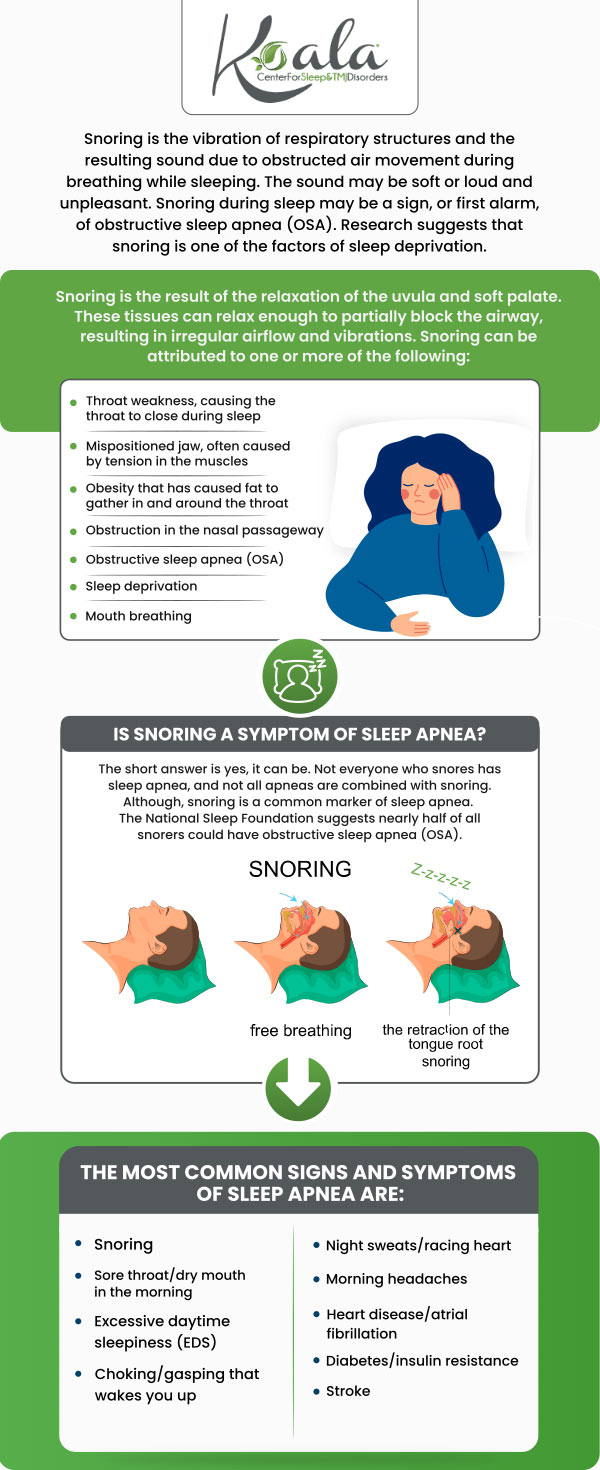
Table of Contents:
Is It Normal to Snore?
What Is the Main Cause of Snoring?
What Is the Best Way to Stop Snoring?
What to Expect From Oral Appliance Treatment
Can Lifestyle Changes Help Reduce Snoring?
Is Oral Appliance Therapy Better Than CPAP?
Find a Snoring Treatment Doctor in El Paso, TX
Frequently Asked Questions
Medical References and Supporting Sources
Yes, occasional snoring is common and is not always a sign of a medical problem. Many people snore when they have a cold, experience nasal congestion, drink alcohol before bedtime, or sleep on their backs.
Snoring happens when airflow through the nose and throat becomes partially restricted during sleep. As the surrounding muscles relax, the soft tissues in the airway vibrate when you breathe, producing the familiar snoring sound.
However, regular or loud snoring should not always be considered normal. It may be associated with obstructive sleep apnea, a condition in which the airway repeatedly becomes blocked during sleep, causing breathing interruptions.
You should consider a professional evaluation if you experience:
• Loud snoring that occurs most nights.
• Pauses in breathing noticed by your sleeping partner.
• Gasping, choking, or snorting during sleep.
• Waking up with a dry mouth or morning headaches.
• Excessive daytime sleepiness or fatigue.
• Difficulty concentrating or feeling refreshed after sleeping.
Not everyone who snores has sleep apnea, and not everyone with sleep apnea snores. However, these symptoms deserve attention because untreated obstructive sleep apnea can affect your cardiovascular health and daily functioning.
At Koala Center for Sleep & TMJ Disorders, we help patients address snoring and related sleep concerns through personalized treatment planning. If sleep apnea is suspected, an appropriate sleep evaluation is important before choosing treatment.
The main cause of snoring is restricted airflow through the upper airway during sleep. When the muscles in your throat relax, the airway can become narrower. Air moving through this smaller space causes the surrounding soft tissues to vibrate.
Several factors can contribute to this narrowing:
1. Relaxed throat muscles: During sleep, the muscles in your tongue and throat naturally relax. If they relax too much, they can partially block the airway and contribute to snoring.
2. Sleeping on your back: When you sleep on your back, gravity can cause your tongue and other soft tissues to move toward the back of your throat, making the airway narrower.
3. Excess body weight: Extra tissue around the neck and throat can place pressure on the airway, increasing the likelihood of snoring and obstructive sleep apnea.
4. Alcohol and certain medications: Alcohol, sedatives, and some muscle-relaxing medications can cause the throat muscles to relax more than usual, increasing airway restriction.
5. Nasal congestion: Allergies, colds, nasal polyps, and structural issues such as a deviated septum can make breathing through your nose more difficult.
6. Age-related changes: As people get older, muscle tone in the throat may decrease, and changes in airway structure can increase the likelihood of snoring.
Understanding the cause is important because different factors may require different treatment approaches.
At our El Paso clinic, we focus on identifying whether snoring may be related to airway positioning, sleep-disordered breathing, or another concern. Our oral appliance therapy is designed to help patients whose snoring may improve with better jaw and airway positioning.
The best way to stop snoring depends on what is causing it. Occasional snoring may improve with simple lifestyle changes, while persistent snoring may require professional evaluation and treatment.
At Koala Center for Sleep & TMJ Disorders, we offer oral appliance therapy as a non-surgical treatment option for snoring and obstructive sleep apnea.
Custom Oral Appliance Therapy
An oral appliance is a small, custom-fitted device worn in the mouth while sleeping. It is designed to help maintain a more open airway by gently positioning the lower jaw forward.
When the lower jaw moves forward, the tongue and surrounding soft tissues may also move forward, creating more room for airflow through the throat.
This can help:
• Reduce soft tissue vibration that contributes to snoring.
• Improve airflow during sleep.
• Reduce airway obstruction in appropriate patients.
• Support better sleep quality.
• Provide an alternative to CPAP for eligible patients.
Oral appliance therapy may be appropriate for adults with primary snoring or certain cases of obstructive sleep apnea. For patients with sleep apnea, treatment selection should be based on a proper diagnosis and clinical evaluation.
At our clinic, treatment involves selecting, designing, fitting, and adjusting an appliance to meet your needs.
The process may include:
Initial evaluation: Our team reviews your symptoms, sleep concerns, medical history, and oral health to help determine whether oral appliance therapy may be appropriate.
Sleep evaluation: If sleep apnea is suspected, an appropriate sleep study and medical evaluation may be needed. We work with physicians as part of the patient’s diagnosis and ongoing care.
Custom appliance fitting: If you are a suitable candidate, a custom oral appliance is selected and fitted to help reposition your lower jaw and support better airflow.
Adjustment and follow-up: The appliance may require gradual adjustments to improve comfort and effectiveness. Follow-up care helps monitor your response, appliance condition, and oral health.
Treatment monitoring: When treating obstructive sleep apnea, follow-up sleep testing is important to confirm that the appliance is controlling the condition effectively.
Yes. Depending on the cause, certain lifestyle changes may help reduce occasional or mild snoring.
You may benefit from:
• Sleeping on your side instead of your back.
• Maintaining a healthy weight.
• Avoiding alcohol close to bedtime.
• Avoiding sedatives unless prescribed and discussing their effects with your healthcare provider.
• Managing allergies and nasal congestion.
• Getting enough sleep each night.
• Avoiding smoking.
These changes may help improve airflow, but they are not a replacement for medical evaluation when sleep apnea is suspected.
Oral appliance therapy and continuous positive airway pressure (CPAP) are both used to treat obstructive sleep apnea, but they work differently.
CPAP uses a machine and mask to deliver pressurized air that helps keep the airway open during sleep. An oral appliance is worn in the mouth and helps maintain airway space by repositioning the lower jaw or tongue.
Oral appliances may be a suitable alternative for adults with mild to moderate obstructive sleep apnea or for certain patients who cannot tolerate CPAP or prefer another treatment.
The best option depends on the severity of your condition, your anatomy, and your treatment needs. Patients should not discontinue prescribed CPAP treatment without consulting their healthcare provider.
Persistent snoring can affect more than your nighttime comfort. It may interfere with your sleep, affect your partner’s rest, and sometimes point to an underlying breathing disorder.
At Koala Center for Sleep & TMJ Disorders, we provide personalized care for snoring, obstructive sleep apnea, and related sleep concerns. Our team focuses on non-surgical oral appliance therapy to help appropriate patients improve airflow and reduce nighttime snoring.
Under the care of Dr. Bryan Kalish, DDS, MS, our El Paso team brings advanced training in oral appliance treatment for snoring and sleep apnea. We also work with physicians as part of the diagnosis and ongoing management of sleep-related conditions.
If snoring is affecting your sleep or quality of life, we invite you to schedule an evaluation with our team.
Koala Center for Sleep & TMJ Disorders
6901 Helen of Troy, Suite D-2
El Paso, TX 79911
Serving El Paso and surrounding communities, including Canutillo, Vinton, Prado Verde, and Santa Teresa.
Contact our team or request an appointment online to learn whether oral appliance therapy may be right for you.
Can snoring be a sign of sleep apnea?
Yes. Frequent, loud snoring can be a symptom of obstructive sleep apnea. Other warning signs include pauses in breathing, gasping, choking, morning headaches, and excessive daytime sleepiness. However, snoring alone does not confirm sleep apnea. A sleep evaluation is needed to determine whether the condition is present.
Can an oral appliance completely stop snoring?
An oral appliance can significantly reduce snoring in appropriate patients by repositioning the lower jaw and improving airflow. However, results vary depending on the underlying cause and individual anatomy. Some patients may experience substantial improvement, while others may need additional treatment.
Are snoring mouthpieces safe to use every night?
A professionally selected and fitted oral appliance can be used nightly when appropriate. However, some patients may experience jaw discomfort, tooth discomfort, dry mouth, increased saliva, or changes in their bite over time. Regular dental monitoring is important to identify and manage these concerns.
Should I see a doctor for regular snoring?
Yes. If you snore frequently, especially if you experience daytime fatigue, morning headaches, choking, or pauses in breathing, you should seek professional evaluation. Persistent snoring may indicate an underlying sleep-related breathing disorder that needs attention.
Can sleeping on my side help stop snoring?
Sleeping on your side may help reduce snoring in people whose symptoms are worse when lying on their backs. This position can help prevent the tongue and soft tissues from moving backward and narrowing the airway. However, it may not resolve snoring caused by other airway problems or obstructive sleep apnea.
MedlinePlus – Snoring in Adults: Causes and Symptoms
NIH/NHLBI – Sleep Apnea Symptoms
Mayo Clinic – Snoring: Diagnosis and Treatment
American Academy of Sleep Medicine and American Academy of Dental Sleep Medicine – Clinical Practice Guideline for Oral Appliance Therapy
NIH/NHLBI – Sleep Apnea Treatment

Additional Services You May Need
▸ KoalaKIDZzz®
▸ Sleep Apnea
▸ Snoring
▸ TMJ Disorder
▸ Fatigue
▸ Sleep Disorders
▸ Weight Loss
▸ CPAP Alternative
▸ Oral Appliances


 Send Text
 How May I Help You?